Introduction
In today’s modern era, technology has changed every aspect of human life, and telecommunications is the most important pillar of this change. The world of mobile networks has developed rapidly, and now the fifth generation, 5G Network, has the potential to revolutionize our daily lives and industrial systems.5G not only delivers high-speed internet, but it also provides a strong foundation for the Internet of Things (IoT), smart cities, autonomous vehicles, and advanced health systems.
But while this technology has numerous benefits, there are also risks. It is very important to consider the topic of 5G Network Vulnerabilities because these weaknesses can directly impact the security of these networks, the privacy of user data, and the security of industrial systems.
This article will provide you with comprehensive information about 5G Network Vulnerabilities, its types, causes, real-world examples, and effective ways to protect against these threats.
Key Features of 5G Network
High-speed data transfer
The most notable feature of the 5G network is its ability to transfer data at extremely high speeds. This speed is many times faster than 4G, which means that large files, videos, and online services are available in a much shorter time.
Low Latency
5G’s low latency makes it highly effective for autonomous vehicles, remote surgery, and online gaming. Low latency means data is transmitted almost instantly, increasing the performance of systems.
More device connections
5G can connect thousands of devices at once, which is beneficial for IoT devices, smart homes, and industrial machinery systems.
Network Slicing
An advanced 5G technique is Network Slicing, which divides the network into different virtual parts to make specific data traffic more secure and efficient. This feature is also important from the perspective of 5G Network Vulnerabilities, as the security of each slice must be strengthened separately.
Advanced security protocols
5G networks use advanced security protocols, such as end-to-end encryption, to keep user data safe. However, new attacks and vulnerabilities can still pose a threat to this advanced security system.
Introduction to 5G Network Vulnerabilities (Introduction to 5G Network Vulnerabilities)
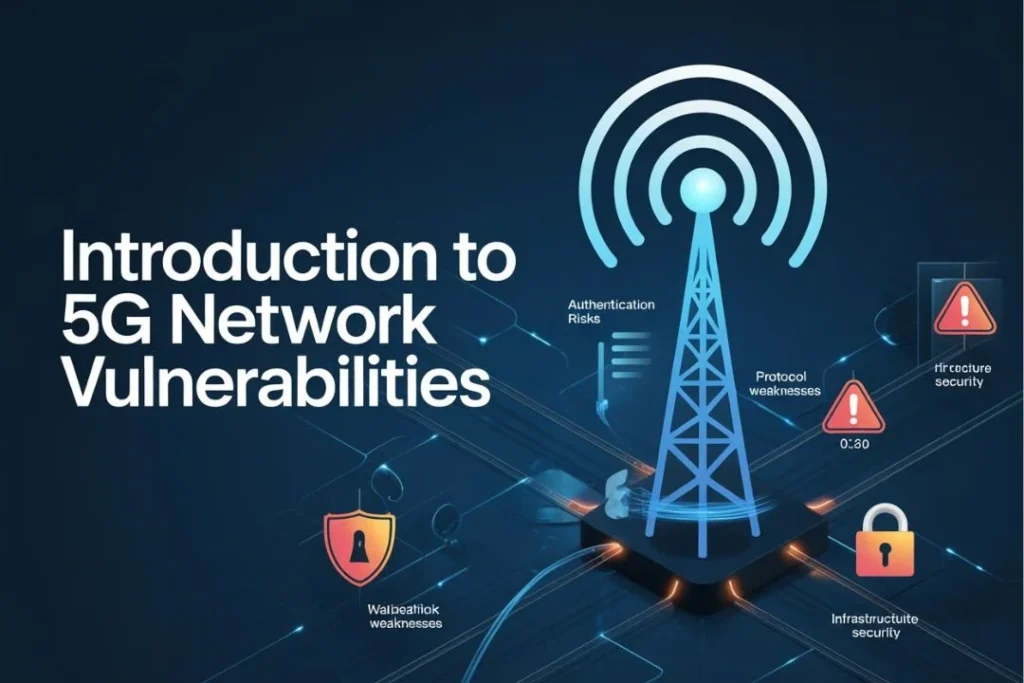
While we think about the benefits and advanced technical features of 5G, it is also important to know that with every new technology comes risks and vulnerabilities. 5G Network Vulnerabilities are actually weaknesses that can affect network security, data protection, and user privacy.
5G network design involves many complexities, such as high speeds, network slicing, virtualization, and a multitude of IoT devices. While these features make the systems more efficient and advanced, they also create vulnerabilities for hackers and malicious actors.
Potential threats due to these vulnerabilities include data theft, service disruption, malware attacks, and privacy breaches. That is why it is important for every company and government to identify the risks inherent in 5G networks and take strong security measures to protect against them.
Important: 5G network vulnerabilities not only affect users’ personal data, but also industrial systems, smart cities, and critical infrastructure can be at risk.
Types of 5G Network Vulnerabilities
Vulnerabilities in 5G networks can be divided into several different types. Each type of vulnerability poses different risks and requires different security strategies to address them.
Physical Vulnerabilities
These vulnerabilities are related to the underlying hardware or physical infrastructure. For example:
- Attacks on cell towers and base stations
- Unauthorized physical access
- Environmental damage or sabotage
Physical vulnerabilities are often overlooked, but they are critical to the overall security of the network.
Software Vulnerabilities
5G networks use various software protocols and applications. If they have any weaknesses in their code or configuration, these are called software vulnerabilities, such as:
- Bugs or coding errors
- Outdated software
- Weak authentication mechanisms
Network Protocol Vulnerabilities
5G networks use advanced protocols, but these protocols can also be vulnerable to attacks by hackers. For example:
- Weaknesses in signaling protocols
- Session hijacking
- Replay attacks
Otdocs Vulnerability
One of the biggest features of 5G is that it supports IoT devices on a large scale. But not every IoT device has strong security, which leads to IoT vulnerabilities. Examples:
- Insecure IoT devices
- Weak default passwords
- Lack of encryption
ProKey and Data Vulnerabilities
Data security is a key requirement for 5G. But some vulnerabilities can jeopardize the privacy of user data:
- Data interception
- Unauthorized tracking
- Metadata leaks
Risks of 5G Network Vulnerabilities
Despite the advanced features of the 5G network, its vulnerabilities can pose serious risks. These risks are not only dangerous for the privacy of users but can also pose challenges to industrial systems and the country’s critical infrastructure.
Data Interception
Data interception is one of the most common and dangerous vulnerabilities of 5G networks. If the encryption or secure transmission protocols in the network are weak, hackers can easily access sensitive user data, such as:
- Personal information
- Financial transactions
- Corporate secrets
ProKey Issues
Despite the high-speed and low-latency features of 5G, user privacy could be at risk. There is a constant flow of data from every device on the network, and if proper safeguards are not in place, personal information could be misused through tracking and profiling.
Man-in-the-middle attacks
In Man-in-the-Middle (MITM) attacks, a hacker intercepts data and modifies or captures it. In 5G networks, the risk of MITM attacks increases due to advanced signaling protocols and virtualized infrastructure.
Dodo Attacks
Distributed Denial of Service (DDoS) attacks are a major threat to 5G networks, especially since 5G supports a multitude of IoT devices. Hackers can attack the network with thousands of compromised devices, disrupting services.
Malware and Ransomware Risks
The high connectivity and fast data transfer of 5G has made it easier for malware and ransomware to spread. A compromised device can affect an entire network segment, which can:
- Industrial control systems can be affected
- Critical infrastructure can be disrupted
- Sensitive data can be encrypted or stolen
Real-World Examples of 5G Vulnerabilities
5G Network Vulnerabilities are not just a theoretical issue; several real incidents have been reported around the world that demonstrate 5G’s vulnerabilities:
Case Study: European Telecom Incident
A major telecom company in Europe reported that sensitive customer data was accessed through unauthorized access to some slices of its 5G network. The incident showed how dangerous vulnerabilities in network slicing and virtualization can be.
ISA 5 Security Reports
In the US, various federal agencies have reported vulnerabilities in the security of 5G infrastructure, particularly in IoT integration and cloud-based services. These reports identify potential entry points for hackers.
Asia Otdocs Breach
Several countries in Asia have experienced network compromise due to IoT vulnerabilities in smart city pilot projects. These incidents demonstrate how vulnerable IoT devices can exacerbate 5G network vulnerabilities.
Frequently Asked Questions (FAQs) about 5G Network Vulnerabilities
What are 5G Network Vulnerabilities?
5G Network Vulnerabilities are weaknesses or flaws that can impact the security, data protection, and user privacy of 5G networks. These vulnerabilities arise due to weaknesses in the network architecture, software, IoT devices, and network protocols.
How dangerous can 5G vulnerabilities be?
These vulnerabilities can create a number of risks, such as:
- Data Interception
- Privacy Breaches
- DDoS Attacks
- Malware and ransomware attacks
How do IoT devices participate in 5G vulnerabilities?
Thousands of IoT devices are connected to 5G networks. If these devices have weak security, such as weak passwords or outdated software, they can create vulnerabilities that could threaten the entire network.
How can 5G Network Vulnerabilities be avoided?
The following steps can be taken to protect against them:
- Use of end-to-end encryption
- Regular software updates and patching
- Network monitoring and intrusion detection
- Strong authentication and access control mechanisms
Are only consumers affected by 5G vulnerabilities?
No. 5G vulnerabilities can not only affect users’ personal data, but also industrial systems, smart cities, healthcare systems, and critical infrastructure can be at risk.
Are 5G vulnerabilities just theoretical or have they occurred in the real world?
These have also occurred in the real world. Telecom companies and government agencies in various countries have reported IoT breaches, unauthorized access, and other security incidents that show that these vulnerabilities exist in practice.
How could the risks of 5G network vulnerabilities increase in the future?
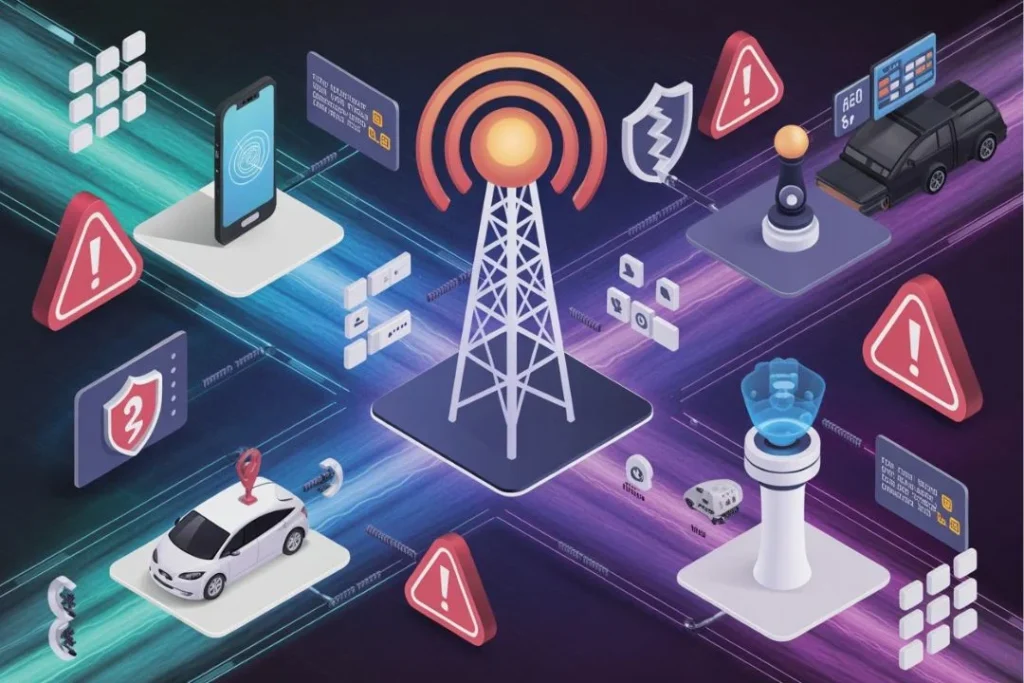
As 5G supports more IoT devices, AI applications, and advanced cloud-based services, the risk of vulnerabilities may also increase. That is why continuous monitoring, research, and new security protocols are needed.
(Conclusion)
5G networks are bringing high-speed internet and advanced connectivity to our lives and industries, but with them come 5G Network Vulnerabilities. These vulnerabilities can pose a threat to user data, privacy, and industrial systems.
These risks can be mitigated through effective security measures such as encryption, strong authentication, network monitoring and timely updates. To reap the benefits of 5G development, it is essential that we understand and protect against vulnerabilities.