Cybersecurity Automation – Protection through modern technology
Security threats in the digital world are increasing day by day. Millions of cyber attacks occur every day that put the sensitive information of companies and individuals at risk. An effective solution to this challenge is Cybersecurity Automation. This advanced technology automatically detects threats, secures systems, and reduces human error.
What is Cybersecurity Automation?
Cybersecurity automation is the process of using automated tools and software to identify, analyze, and respond to threats quickly, reducing human intervention and allowing organizations to manage their data more securely.
Important Cybersecurity Automation Tools
- SIEM (Security Information and Event Management)
- SOAR (Security Orchestration, Automation, and Response)
- Endpoint Detection and Response (EDR)
- Vulnerability Management Tools
Key Benefits of Cybersecurity Automation
Quick identification of hazards
Traditional methods take time to identify threats, but Cybersecurity Automation has the ability to detect attacks in seconds and take immediate action.
Automatic reply
When a suspicious action or attack is detected, the automation system immediately responds, such as isolating infections or blocking dangerous links.
Saving time and resources
Instead of manual monitoring, automation tools work day and night, saving human resources and saving time for the organization.
Reduction in human errors
Without human intervention, data and security processes become more stable and reliable.
The need for Cybersecurity Automation in the digital world
With the increasing use of the internet and online services, the risks have also increased. There are millions of data breach attempts every day, and it is difficult for a human team to handle all of them in a timely manner. This is where Cybersecurity Automation comes in, which protects organizations by automating the process of identifying and responding to threats.
Basic Aspects of Cybersecurity Automation
Automated Monitoring:
This technology monitors networks and systems day and night to quickly detect suspicious activity.
Instant Threat Response:
When a threat is detected, the automation system takes immediate action such as quarantining a suspicious file or blocking an unsafe user.
Data security and secure storage:
Cybersecurity Automation System securely stores sensitive information and prevents unauthorized access.
Reduction in human errors:
Since most of the process is automated, the possibility of human errors is almost eliminated.
Cyber threats and traditional security issues
Growing cyber threats in the digital world
In today’s era, every organization and individual is trying to keep their information safe, but the nature and complexity of cyber threats are increasing every day. Hackers, malware, ransomware, phishing attacks, and other dangerous attacks can damage organizations’ information.
These risks not only cause financial losses but also affect a company’s reputation, customer trust, and business operations.
Traditional security issues
In the past, organizations relied mostly on human teams and manual processes for their security systems. This approach presented several problems:
Possibility of human errors

It’s common to make mistakes in manual security processes. A small oversight can lead to big losses, such as overlooking a suspicious file or poor password policies.
Late identification of risks
Traditional security systems often fail to identify threats immediately. The attack has already occurred, and the damage has been done, before the response begins.
More time and resources required
Monitoring and responding to threats through human teams is time-consuming and expensive, placing additional strain on an organization’s resources.
Limited availability
Human teams cannot operate 24/7, while cyberattacks can occur at any time. As a result, traditional security systems are often left vulnerable to attacks.
The need for Cybersecurity Automation
These are the reasons why Cybersecurity Automation is essential. Automation enables immediate threat identification, automated response, and continuous monitoring. It not only reduces human error but also makes security processes faster, more effective, and more reliable.
Types of cyber threats and ways to deal with them
Malware:
- Dangerous programs like viruses, spyware, and trojans that damage the system.
- Automation solutions: Cybersecurity Automation tools immediately quarantine malware and secure the system.
Phishing Attacks:
- Stealing sensitive information through fake emails or websites.
- Automation solutions: AI-based filters and automated alerts can identify suspicious links and emails.
Ransomware:
- Encrypting the system or data and demanding a ransom.
- Automation solution: Provides immediate system recovery and protection through automated backup and threat detection.
Data theft and unauthorized access:
- Unauthorized access to sensitive information by hackers or internal employees.
- Automation solutions: Instantly stop unauthorized activities through access control and continuous monitoring.
Key Benefits of Cybersecurity Automation
As seen in the previous section, cyber threats are increasing day by day and traditional security methods are failing to respond to them effectively. That is why Cybersecurity Automation has become an essential requirement for every organization. In this section, we will see in detail how Cybersecurity Automation provides benefits to organizations and how it establishes a strong defense against threats.
Instant Threat Detection
- The biggest advantage of Cybersecurity Automation is that it identifies threats immediately.
- Automated Monitoring: This system monitors the network and systems at all times.
- Security Alerts: Alerts are issued immediately after suspicious activity, allowing the threat to be controlled before it escalates.
- Example: If there is a suspicious login attempt by a user, the automation system immediately blocks it.
Automated Response
- Cybersecurity Automation Systems provide a quick and effective response to threats.
- Quarantine and Block: Suspicious files or users are immediately isolated.
- Incident Management: Automated response minimizes damage in the event of an attack.
- Example: During a ransomware attack, an automation system isolates the affected files and restores data from backup.
Time and Resource Efficiency
- Manual monitoring and threat response take up a lot of time.
- Cybersecurity Automation works around the clock and reduces the need for a human team.
- This way, organizations can better utilize their resources and time for business processes.
Reduction of Human Error
- Human teams can occasionally make mistakes, such as ignoring suspicious emails or poor password policies.
- Cybersecurity Automation automates most of the process, virtually eliminating the possibility of errors.
- This feature provides organizations with reliable security.
Continuous Monitoring and Uptime
- Cybersecurity Automation provides 24/7 monitoring.
- Any attack or suspicious activity can be detected immediately.
- Organizations can keep their services and data secure without interruption.
Enhanced Data Protection
- Cybersecurity Automation protects sensitive information from unauthorized access.
- It protects data through automated encryption, access control, and backup.
- Organizations can maintain the trust of their customers.
Focus: Cybersecurity Automation
What is Cybersecurity Automation?
Cybersecurity Automation is a system that automates the process of identifying, monitoring, and responding to threats. It reduces human intervention and makes security more effective and reliable.
What is the key requirement for Cybersecurity Automation?
With the increasing cyber threats and human error in the digital world, traditional security is no longer enough. Cybersecurity Automation provides immediate threat identification, automated response, and continuous monitoring, strengthening the security of organizations.
What are the benefits of Cybersecurity Automation?
- Instant threat identification
- Automated response
- Save time and resources
- Reduce human error
- Continuous monitoring and uptime
- Improved data protection
What tools are used for Cybersecurity Automation?
Key tools include:
- SIEM (Security Information and Event Management)
- SOAR (Security Orchestration, Automation, and Response)
- EDR (Endpoint Detection and Response)
- Vulnerability Management Tools
Is Cybersecurity Automation Beneficial for Small Businesses?
Yes, small organizations with limited resources and teams can achieve strong security in less time and with fewer resources through Cybersecurity Automation.
How does cybersecurity automation reduce human errors?
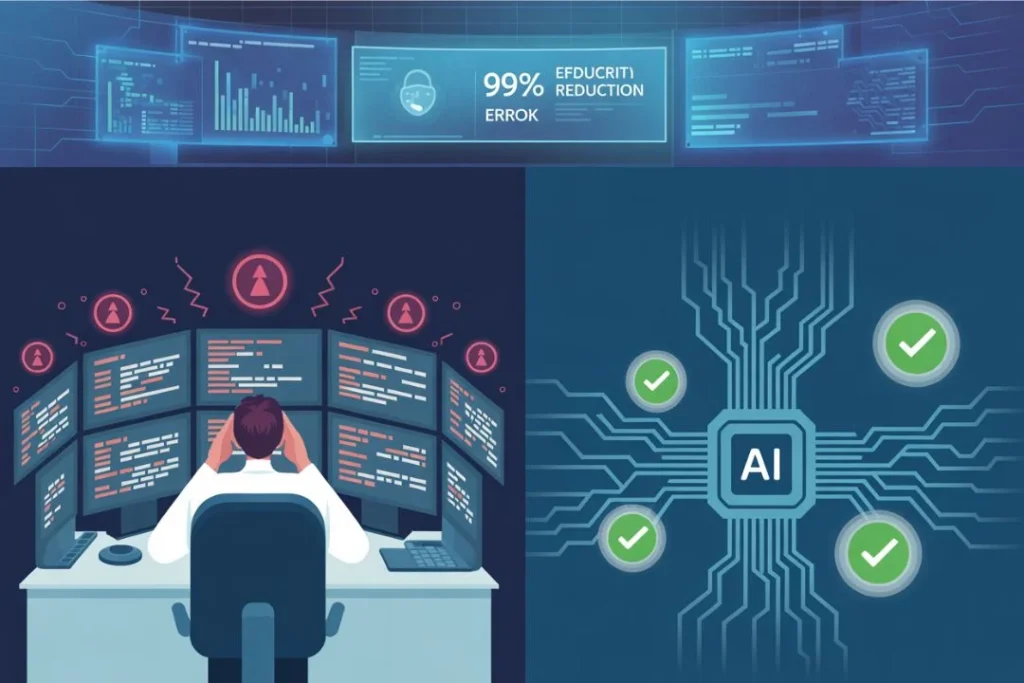
Because most security processes are automated, human errors such as ignoring suspicious files or poor password policies are almost eliminated.
(Conclusion)
Cybersecurity Automation has become a must-have for organizations in today’s digital era. These automated systems provide immediate threat identification, effective response, and continuous monitoring, reducing the likelihood of human error and ensuring a consistent level of security..
In the future, as artificial intelligence and machine learning technologies advance, Cybersecurity Automation will become smarter and more automated, even better than a human team at responding to threats quickly and effectively.