
IoT Security Challenges – Internet of Things Security Challenges
In the modern era, the Internet of Things (IoT) has made our lives incredibly easier. Smart homes, connected vehicles, health monitoring devices, and industrial systems are all part of IoT.
But while this technology offers countless conveniences, it also comes with a major problem — IoT Security Challenges.
What are IoT Security Challenges?
IoT Security Challenges refer to the difficulties and threats that affect the security of devices connected to the Internet.
As the number of IoT devices is growing rapidly, the risk of cyber attacks on them is also increasing.
Important IoT Security Challenges
Weak passwords and default settings
Most IoT devices come with pre-set default passwords, which users do not change.
This vulnerability makes them an easy target for hackers.
Lack of data encryption
Many IoT devices do not encrypt data. This means that sensitive information, such as location or personal data, can be easily intercepted.
Outdated or insecure software
Outdated firmware or software can be dangerous for IoT networks. Vulnerabilities increase due to lack of updates.
Network security vulnerability
If security protocols on the network are not strong, hackers can gain access to the entire system.
Privacy Concerns
IoT devices collect thousands of data points every day. If this data falls into the wrong hands, it creates a serious privacy issue.
Ways to address IoT Security Challenges
- Use strong passwords.
- Update device firmware regularly.
- Make sure to use data encryption.
- Secure your network with a VPN or firewall.
- Only use products from trusted IoT manufacturers.
The importance of IoT Security Challenges in the USA
IoT technology is becoming increasingly common in the United States — in smart homes, medical devices, and industrial automation.
But cybersecurity regulations there are also strict. American companies are now pushing to adopt IoT Security Standards to maintain consumer trust.
What is IoT?
IoT is a system in which various devices — such as sensors, cameras, and home machines — are connected to each other via the internet and exchange data.
When this data is not secure, IoT security risks arise.
Ways to protect against IoT security risks
- Have strong and unique passwords for each device.
- Don’t neglect firmware and software updates.
- Secure your network with a VPN or firewall.
- Only buy IoT devices from trusted brands.
- Make data encryption mandatory to keep information secure.
🇺🇸 IoT Security Trends in the USA
IoT technology is rapidly being adopted in the United States, especially in the health, energy, and smart home industries.
However, the US government and companies are now paying more attention to IoT Cybersecurity Standards to ensure that consumer data is protected.
Laws such as the Federal IoT Cybersecurity Act are designed to ensure consumer privacy.
What are the security vulnerabilities of IoT?
When different devices are connected to each other via the Internet, their data is transferred to different servers.
If this data is not secured, problems like cyber attacks, data leaks, and hacking arise — these are called IoT Security Issues or IoT Vulnerabilities.
Important Security Risks (IoT Threats)
Lack of authentication (Authentication Gaps)
Many IoT devices do not have a proper user or system authentication system, which makes unauthorized access possible.
Data leaks and privacy violations
When data from IoT devices is not encrypted, hackers can easily steal users’ personal information.
Weak security updates
If a device’s software is not updated, it can become vulnerable to old security bugs, which becomes an easy route for attackers.
Insecure communication networks
If TLS or HTTPS protocols are not used in IoT systems, data can be hacked during transfer.
Lack of security management at a large level
When thousands of devices are on a network, having a robust IoT Security Management System is essential to protect them.
Solutions to reduce security risks in IoT
- Make data encryption mandatory.
- Use two-factor authentication on every device.
- Auto-update firmware updates.
- Close unnecessary network ports.
- Use security monitoring systems regularly.
🇺🇸 IoT Security Landscape in the USA
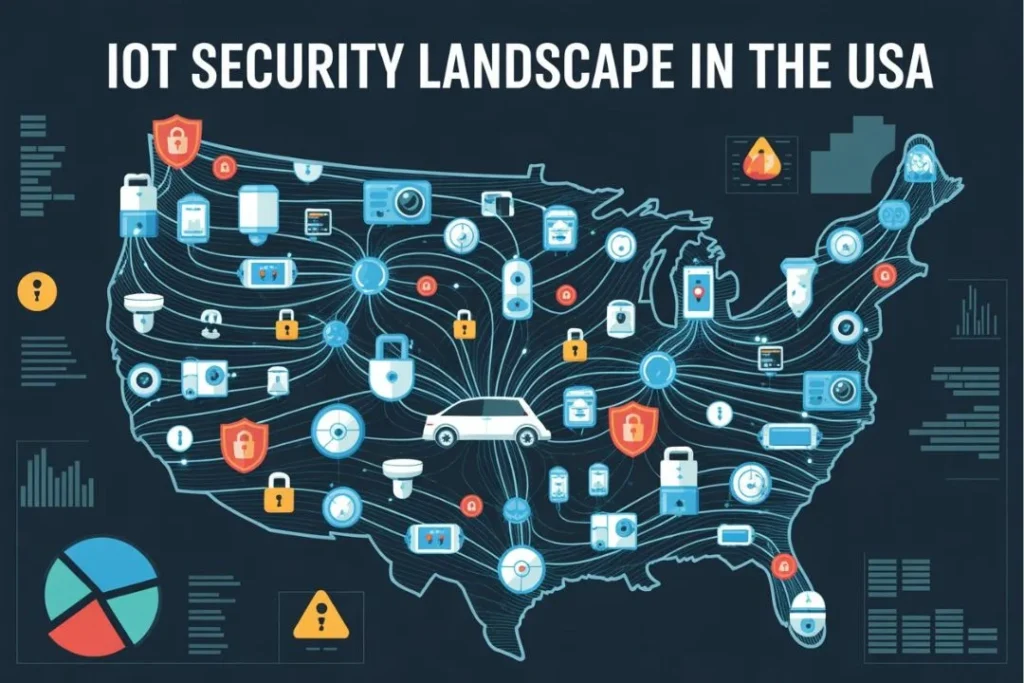
The IoT industry in the US is growing rapidly, but at the same time, cybersecurity compliance laws are also being tightened.
US companies are now adopting the Zero Trust Model so that each IoT device is authenticated before being granted access to the network.
Basic IoT Security Concerns
IoT systems are actually made up of millions of tiny digital doors, each of which could be a potential entry point for hackers.
These doors are the same devices we use every day:
cameras, speakers, refrigerators, cars, even hospital monitoring equipment.
Key IoT security challenges
Unauthorized Access
Many IoT networks do not have a proper user identification system, which allows any unwanted person to enter the system.
Data Theft
IoT devices constantly collect data — if this information is not encrypted, hackers can easily gain access to users’ identities, locations, and habits.
AI-driven attacks
Hackers now use AI tools to automatically find vulnerabilities in IoT networks. This threat has become more sophisticated than ever.
Risks of Industrial IoT
If IoT machines used in factories are affected, the entire production system could be damaged.
Misconfiguration
If the IoT network is not set up correctly, even a minor mistake can lead to a major cyber attack.
Innovative ways to strengthen IoT security
- Adopt a Zero Trust Security Model — Don’t blindly trust any device.
- Use AI-based Threat Detection Systems.
- Make Encrypted Communication Channels (TLS/SSL) mandatory.
- Secure the network with Firewall and Network Segmentation.
- Use Device Authentication Certificates so that only trusted devices can connect.
🇺🇸 Growing IoT Security Pressure in the USA
- Every major company in the US — whether tech or healthcare — is now prioritizing IoT security.
- NIST (National Institute of Standards and Technology) has released IoT-specific security frameworks to help mitigate data breaches.
- The demand for Secure-by-Design IoT Devices is now rapidly growing in the US market.
IoT Security Challenges – FAQs in English
What are the biggest security threats to the Internet of Things (IoT)?
- The biggest security risks in IoT systems include data theft, unauthorized access, weak passwords, and insecure network connections.
- Most IoT devices run on default settings, which can be easily attacked by hackers if left unmodified.
- Smart Home Devices and Industrial IoT Systems, in particular, are becoming major targets of these attacks in the US.
Why are cybersecurity issues increasing in IoT?
- The reason is that millions of new IoT devices are connecting to the internet every day.
- These devices typically have limited processing power, so advanced security features are not included in them.
- As a result, the chances of malware and botnet attacks increase.
What can be done to strengthen data protection in IoT?
- The most important step for data protection in IoT is data encryption.
- Along with this, Two-Factor Authentication, Secure Cloud Storage, and Network Monitoring Tools are also essential.
- Many companies in the US are using AI-Based Security Systems that identify and block threats in real time.
What should users keep in mind for the security of smart devices?
- Users should always keep their IoT devices’ firmware updated, change default passwords, and avoid using unsecured Wi-Fi networks.
- Furthermore, using a VPN or Firewall is the best way to secure IoT.
- Home Cybersecurity Kits are also becoming popular in the USA, which help users secure their smart networks.
Why are security challenges more serious in Industrial IoT?
- In industrial systems, IoT machines directly control the production process.
- If a hacker gains access to this system, he can shut down the entire plant or cause financial losses through data manipulation.
- That is why companies in the US are required to adopt specific security standards under the NIST IoT Security Frameworks.
What are IoT Privacy Risks?
- IoT devices are constantly collecting users’ personal data — such as location, voice, video, or health data.
- If this information is not secured, problems like Identity Theft, Location Tracking, and Data Misuse can arise.
- That’s why IoT Data Protection Laws are being tightened in the USA.
What will be the trend of IoT security in the future?
- In the future, advanced solutions such as Artificial Intelligence (AI), Blockchain Technology, and Quantum Encryption will emerge for IoT security.
- Several companies in the USA are already building AI-driven IoT Defense Systems, which automatically identify threats and secure the network.
- This trend will determine the direction of the future.
Is it possible to completely eliminate IoT security challenges?
- It may not be possible to eliminate them completely, but their impact can be greatly reduced.
- This will only be possible if manufacturers, governments, and consumers prioritize security at all three levels.
- New regulations, Secure-by-Design Devices, and User Awareness Campaigns can form the basis for securing the IoT.
How can IoT network security be strengthened?
- To strengthen IoT network security, first adopt network segmentation, so that different devices are in separate zones from each other.
- Along with this, use Firewall Rules, Intrusion Detection Systems (IDS) and VPN Encryption.
- Many companies in the USA are using AI-powered IoT Network Monitors that block hacking attempts in real-time.
- It is also important to always run the network on TLS or SSL Protocols so that data remains secure.
What is the role of governments regarding IoT security?
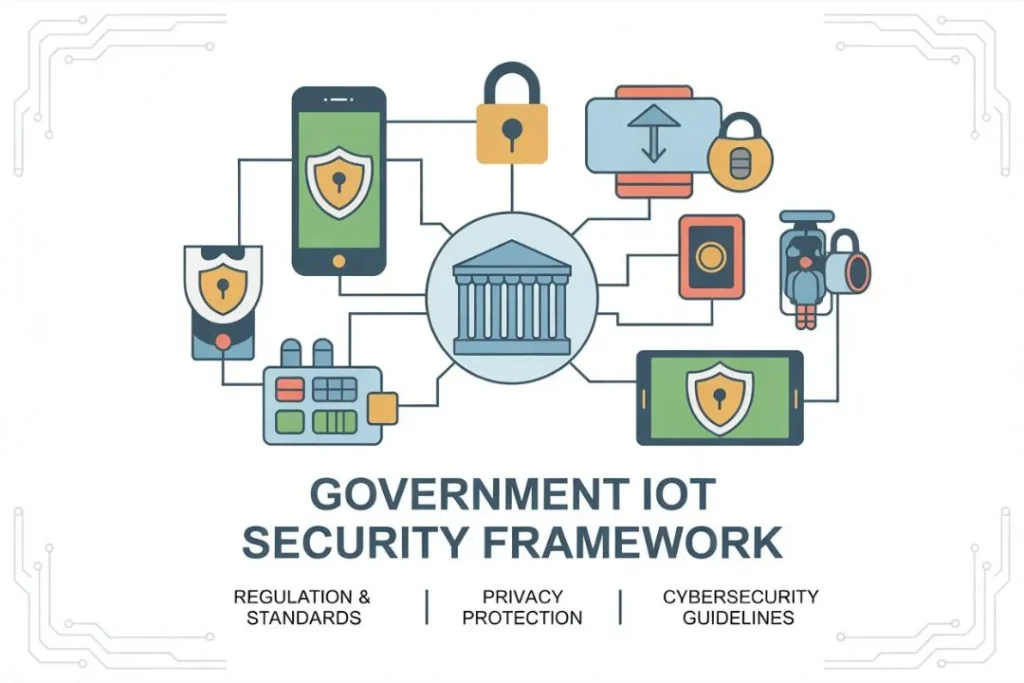
- Governments play a fundamental role in promoting IoT security.
In the United States, the Federal IoT Cybersecurity Improvement Act has been enacted, requiring all government agencies to use secure IoT devices.
Additionally, NIST and the Department of Homeland Security (DHS) regularly issue IoT Security Guidelines to help manufacturers, businesses, and consumers use IoT technology safely. - Similarly, other countries are also developing IoT security policies to ensure that digital infrastructure remains secure in the future.
(Conclusion)
- IoT security challenges are one of the biggest issues in today’s digital age.
- These risks can be significantly reduced if we focus on strong data protection, encryption, and network security.
- Secure smart devices and responsible usage can lay the foundation for a secure IoT system of the future.