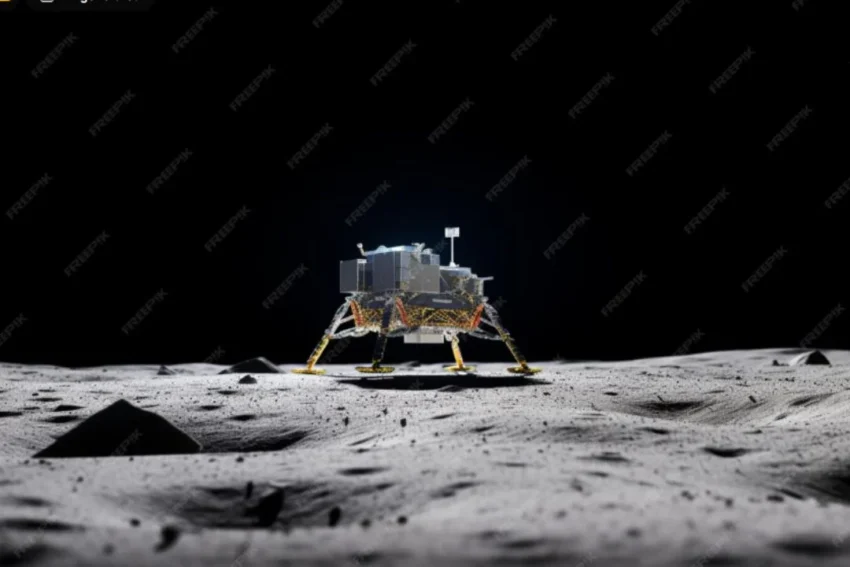
Introduction and the dream of reaching the moon
The dream of landing on the moon has been in the hearts of humanity for centuries. The moon has held a very important and mysterious place in various cultures and stories around the world. But in the middle of the 20th century, this dream began to become a reality, especially for the USA, which pooled its resources and the best scientific expertise for this purpose.This move was not only a scientific achievement but also played a significant role in the balance of political and global power. The success of the Moon Landing not only elevated the United States in the space race but also opened new avenues for human exploration and technology around the world.
Dream of reaching the moon
Man has always looked at the sky and thought that one day he would set foot there. Ancient people viewed the moon as a deity and determined the weather and time by its movements and changes. Over time, science helped man understand that the moon is a natural planet of the Earth, and there are possibilities to go to it.
The USA and the Space Race
In the mid-20th century, the world was divided between two superpowers, the USA and the USSR. In the context of the Cold War, achieving superiority in space was not just a scientific but also a political and strategic imperative. Russia launched the first satellite into space with Sputnik 1 in 1957, which posed a challenge to the United States.This incident inspired the USA to strengthen its space exploration and make the dream of Moon Landing a reality.
NASA and mission preparation
In 1958, the USA established NASA (National Aeronautics and Space Administration), with the aim of organizing human exploration in space and preparing missions to send humans to the Moon. NASA initially launched several programs, such as Mercury and Gemini, that were necessary to prepare for long-term human presence in space, movement in space, and the complexities of the missions.
Academic and public meaning
The Moon Landing was not just a goal for America, but it was a milestone for the entire world. It was an example of human exploration, exploration, and struggle. For the American people, it was a moment of national pride, and people around the world watched this historic achievement with great excitement.
Description of the Apollo program and the USA’s missions
NASA and the beginning of the Apollo program
After NASA was founded in 1958, the United States set a new pace in space exploration. The early Mercury and Gemini programs provided the United States with fundamental experiences: human presence in space, movement in space, and preparation for long-duration missions. But the greatest challenge was for the United States to send a man to the Moon.
In 1961, President John F. Kennedy gave a historic speech, declaring that the United States would land a man on the moon and return him safely to Earth by the end of the next decade. This announcement was not only a political goal but also a scientific commitment, which led NASA to establish the Apollo program.
- The goal of the Apollo program was clear:
- to land a man on the moon
- to conduct scientific experiments and observations
- to push the boundaries of human technology and space travel
Description of Apollo missions

The Apollo program consisted of several missions, each of which built on the lessons learned from the previous missions. These missions included:
- Apollo 1: The initial mission, unfortunately, suffered a fire accident that killed three astronauts. The accident taught NASA the need for safety measures and system robustness.
- Apollo 7 and 8: These missions were important in testing human presence in space. Apollo 8 took the first step towards placing humans in lunar orbit.
- Apollo 9 and 10: These missions were in preparation for the lunar landing, testing the technical capabilities of the spacecraft and the lander.
Apollo 11: The Historic Moon Landing
- Apollo 11 was a mission that made history. The mission included three astronauts:
- Neil Armstrong (Commander)
- Buzz Aldrin (Lunar Lander Operator)
- Michael Collins (Commander)
Departure and mission description
Apollo 11 launched from Cape Canaveral, Florida, on July 16, 1969. During the mission, the command ship and lunar lander underwent various procedures to ensure a safe landing on the Moon.
The historic moment of stepping on the moon
On July 20, 1969, Neil Armstrong set foot on the moon. His historic words,
“That’s one small step for man, one giant leap for mankind,” became famous around the world.
Buzz Aldrin also set foot on the lunar surface, while Michael Collins remained in command in orbit to ensure the safety of both.
Experiments and observations on the moon
The Apollo 11 astronauts conducted various experiments on the lunar surface, such as:
- Collecting soil and rocks
- Sending images back to Earth
- Placing scientific instruments to measure the moon’s gravity, atmospheric conditions, and surface analysis
- These experiments were not only important for scientific research but also a testament to America’s technological and scientific advancement.
Scientific and political implications
The Moon Landing had a profound impact on the world. Scientifically, it was a groundbreaking event for humanity. Politically, the United States took the lead over the USSR in the space race. Publicly, it was a moment of national pride and strengthened America’s global influence.
Post-mission steps
After the successful Apollo 11 mission, the USA launched a series of missions: Apollo 12, 13, 14, etc. Each mission carried out different scientific objectives and technical experiments. Some missions were successful, some failed, but each mission paved the way for humans to set foot on the moon.
Missions after the Moon Landing and their scientific and global impacts
Missions after the Moon Landing
After the historic success of Apollo 11, the USA decided to continue with more human missions to the Moon. The aim was not only to put humans on the Moon, but also to expand human knowledge, technology, and scientific experiments.
Apollo 12
Apollo 12 launched on November 14, 1969. This mission was also part of the Moon Landing but was intended to conduct more scientific experiments than the first. The astronauts collected more rock and soil samples, and installed various instruments on the Moon to obtain data for research on Earth.
Apollo 13
Apollo 13 is a memorable mission, but it also had an accident. The oxygen tank in the spacecraft exploded, preventing the mission from reaching the Moon. However, the NASA team managed to safely return the astronauts to Earth through great technical expertise. This incident is a great example of human ingenuity and the use of technology in a crisis.
Later missions: Apollo 14 to Apollo 17
These missions continued after the Moon Landing, and each mission expanded the world of research and experimentation on the Moon:
- Further exploration of the lunar surface
- Collection of more detailed samples
- Observation and mapping of different regions
- Providing scientific data for Earth
USA’s future space plans
After the Moon Landing, the USA continued space exploration and launched new missions and programs:
Space Shuttle Program
In the 1970s, the USA launched the Space Shuttle program, which aimed to facilitate repeated trips into space and human presence for research.
International Space Station (ISS)
The International Space Station was launched in 1998, with the USA playing a major role. The station provides a platform for experiments and research for scientists from around the world.
Artemis program
The Artemis program is the latest effort by the United States to return humans to the Moon, and establish a permanent human presence there in the future. NASA is working with private companies such as SpaceX and Blue Origin on this program.
Future technology and human life
The Moon Landing not only paved the way for human presence in space, but also created opportunities for technological advancements on Earth. In the future, human settlements and new missions to the Moon will open new avenues for human life and exploration.
Moon Landing FAQs (Common Questions and Answers)
What is Moon Landing?
Moon Landing is the historic event in which man first set foot on the surface of the Moon. This mission was successful on July 20, 1969, under the USA’s Apollo 11 program. It was a milestone in human history, which ensured America’s superiority in the scientific, technological, and political fields.
When and who did the Moon Landing?
The first Moon Landing was on July 20, 1969. The mission was commanded by Neil Armstrong and lunar lander operator Buzz Aldrin. Neil Armstrong was the first to step on the moon, followed by Buzz Aldrin. Michael Collins was in orbit as commander and protected both.
Where did the Moon Landing take place?
The first Moon landing took place in an area of the Moon called the Sea of Tranquility. It was a relatively flat and safe place, where astronauts had a high chance of landing.
What did the USA do after the Moon Landing?
After the Moon Landing, the USA launched more Apollo missions: Apollo 12, 13, 14, etc. Each mission involved research on the Moon, collecting soil and rock samples, and installing scientific instruments. Later, the USA continued space exploration through the Space Shuttle program, the International Space Station (ISS), and the current Artemis program.
What impact did the Moon Landing have on the future of humanity?

The Moon Landing showed humanity that human limits could be challenged. It laid the foundation for future missions, human settlements on the Moon, and human exploration in space. NASA’s Artemis program is advancing this thinking, with the goal of sending humans back to the Moon and promoting sustainable exploration.
(Conclusion)
The Moon Landing is an extraordinary milestone in human history that not only put America ahead in the space race but also revolutionized scientific research, technology, and global influence. This historic achievement showed humanity that the impossible can be made possible through struggle, knowledge, and courage.Even today, the impact of the Moon Landing guides future space missions and the journey of human exploration and development.