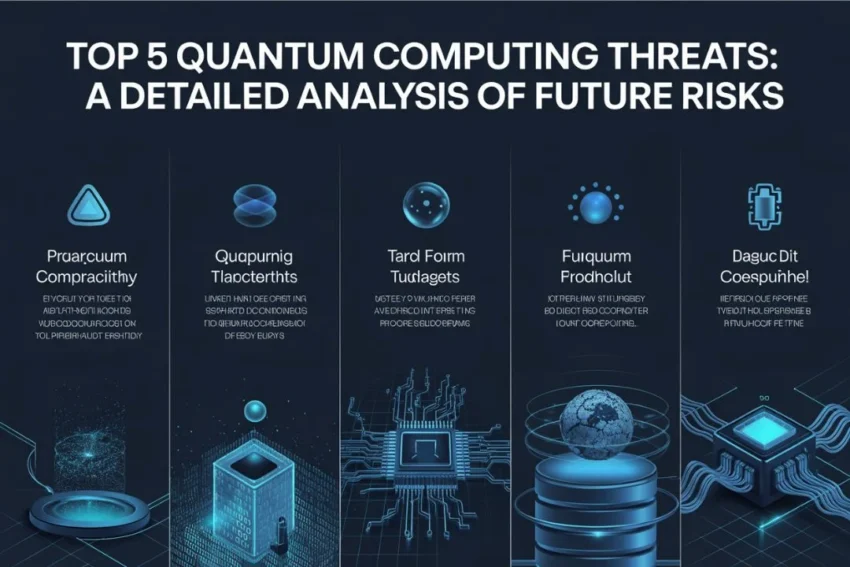
Quantum Computing Threats
Quantum computing is one of the fastest and most advanced technologies of today. It has the potential to revolutionize the world of computing, but it also comes with some risks (Quantum Computing Threats) that can prove to be a challenge for cybersecurity and data privacy.
What is quantum computing?
Quantum computers are much more powerful than traditional computers. They process information using qubits, which can exist in multiple states at once. This feature allows quantum computers to solve complex problems faster, such as chemistry, artificial intelligence, and financial models.
Quantum Computing Threats
Quantum computing has many benefits, but its risks (Quantum Computing Threats) are also not few. Below is a description of the main risks:
Impact of cryptography on security
Quantum computers can easily break traditional encryption algorithms like RSA and ECC. This means that data that is considered secure today could be compromised in the future.
Privacy risk
The biggest problem with Quantum Computing Threats is that sensitive information, banking transactions, and personal data can be easily accessible to hackers.
Impact on the financial system
The power of quantum computers in the banking and financial sector could be misused to commit financial fraud, data theft, and gain illegal advantage in the market.
Quantum Computing Threats
Cryptography breach
The biggest threat is attacks on traditional encryption systems. Data that is considered secure today, such as banking, government, and private information, could be easily decrypted by quantum computers in the future. These Quantum Computing Threats can not only cause data leaks but also financial losses.
Privacy and Identity Theft
Quantum computing could put sensitive data such as passwords, credit card numbers, and identity information at risk. Hackers could use advanced quantum algorithms to increase the chances of data theft.
Impact on the financial system
Illegal benefits can be gained from the misuse of quantum computers in banking and the stock market, such as hacking high-frequency trading in the market or hacking financial transactions.
National security threats
Quantum computing can compromise sensitive national defense information, secret networks, and intelligence data. Therefore, every country must be prepared for Quantum Computing Threats.
Impact on artificial intelligence and automated systems
Quantum computers can make AI models faster and more powerful, but hackers can also use that same power to do harm. This could create unexpected risks in autonomous systems in the future.
Ways to protect against Quantum Computing Threats
Post-quantum cryptography
Developing encryption algorithms that are secure against quantum computers.
Updating data encryption
Banks, institutions, and governments should use modern encryption techniques to keep sensitive data secure.
Security and training
To educate individuals and institutions about the risks and security measures of quantum computing.
Research and Innovation
Promoting positive uses of quantum computers and conducting research to mitigate risks.
Legal and government measures
Governments should take steps to protect against Quantum Computing Threats through laws and policies.
How do quantum computers work?
Quantum computers use qubits, which are different from traditional binary bits. A qubit can be in multiple states at once, called superposition, and can process information extremely quickly by interacting with each other, called entanglement.
These properties make quantum computers thousands of times more powerful than traditional computers, and give them the ability to solve complex problems in seconds.
Ways to protect against Quantum Computing Threats
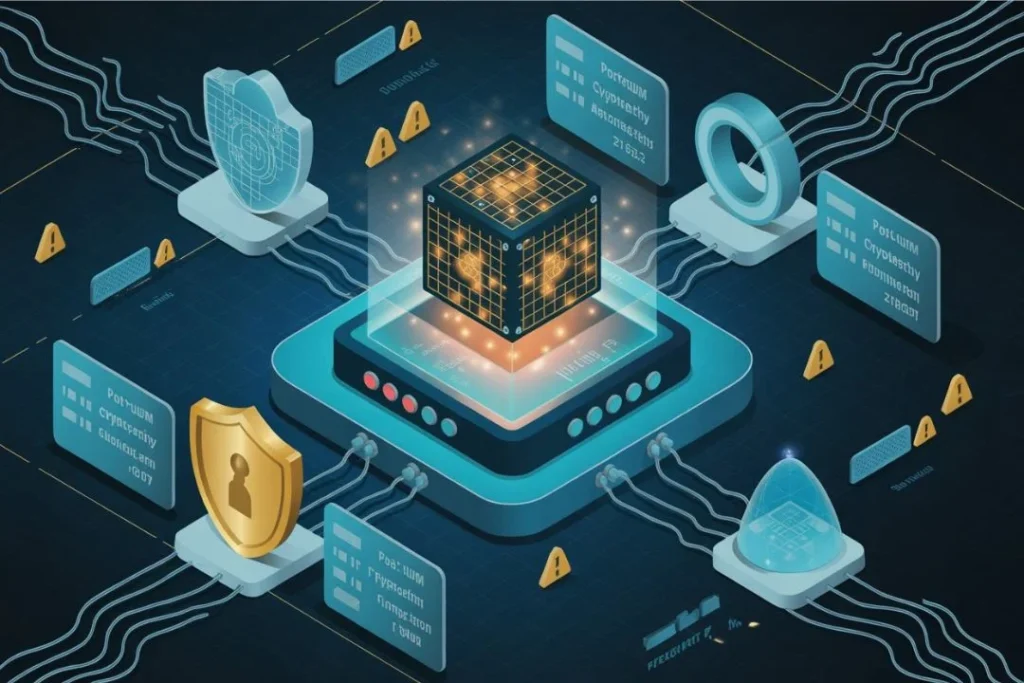
- Post-Quantum Cryptography: Using algorithms that are secure against quantum computers.
- Advanced Data Encryption: Adopting advanced encryption techniques to protect sensitive information.
- Security Training: Educating individuals and organizations about the risks and security measures of quantum computing.
- Research and Advanced Technology: Promote the positive uses of quantum computers and conduct research to mitigate risks.
- Legal and Governmental Actions: Reduce the impact of Quantum Computing Threats through policy and legislation.
Basic characteristics of quantum computers
Quantum computers use qubits that can exist in multiple states at once, called superpositions. In addition, the entanglement between qubits enables fast and efficient processing of information. These properties make quantum computers many times more powerful than conventional computers.
Quantum Computing Threats: An In-Depth Analysis
Quantum computing technology has revolutionized the world of computer science. While this technology can give a new direction to the world on many fronts, its Quantum Computing Threats can also become a serious problem. In this article, we will understand the threats of quantum computing in detail and see what kind of threats it can create in our daily lives, cybersecurity, and on a global scale.
Precautions to protect against Quantum Computing Threats
There are a few essential steps that can be taken to protect against the risks of quantum computing, including:
Post-quantum cryptography
New encryption techniques are being developed that are secure against quantum computers. The goal of Post-Quantum Cryptography is to make it possible to secure data encrypted by quantum computers in the future.
Modern techniques of system and network security
The current security protocols we use need to be updated so that they can be effective against quantum computers.
Human training and awareness
It is important to educate institutions about the risks of quantum computing and how to protect against them so that they can better combat these threats.
Researching the positive uses of quantum computing
We should conduct research to use the capabilities of quantum computing in positive ways to maximize its benefits, such as in medicinal research, climate modeling, and cryptographic advancements.
FAQs: Quantum Computing Threats
What are quantum computers?
Quantum computers are computers that use qubits instead of traditional binary bits. These qubits can be in both a 0 and a 1 state at the same time, which is called superposition. In addition, through the property of entanglement, these computers can solve complex problems at high speed.
What are the threats of quantum computers?
The biggest threat to quantum computers is cryptography, as they can easily break existing encryption algorithms. In addition, issues such as data privacy, financial fraud, cybersecurity, and national security may also arise.
Can quantum computers break encryption?
Yes, quantum computers can break today’s traditional encryption systems like RSA and ECC. Because quantum computers can perform calculations at high speeds, they can easily decode encrypted data, which is a major threat to data security.
What measures can be taken to protect against the dangers of quantum computers?
Various measures can be taken to protect against the risks of quantum computing:
- Post-Quantum Cryptography: Developing encryption techniques that are secure against quantum computers.
- Data Security: Using modern security protocols.
- Awareness and Training: Educating institutions and individuals about the risks of quantum computing.
- Legal Measures: Mitigating the risks of quantum computing through laws and policies.
What impact will quantum computing have on our daily lives?
Quantum computing could have a profound impact on our daily lives. If this technology falls into the wrong hands, our privacy, financial security, and other important information could be at risk. However, if it is used safely, it could bring improvements in areas as diverse as health, energy, and environmental issues.
Could the dangers of artificial intelligence (AI) increase with the help of quantum computers?
Yes, the power of quantum computers could make artificial intelligence (AI) much faster and more powerful, but it could also be misused to hack AI systems and control automated machines. This could potentially lead to major problems, such as the malfunctioning of automated systems or the misuse of artificial intelligence.
What impact could quantum computers have on national security?
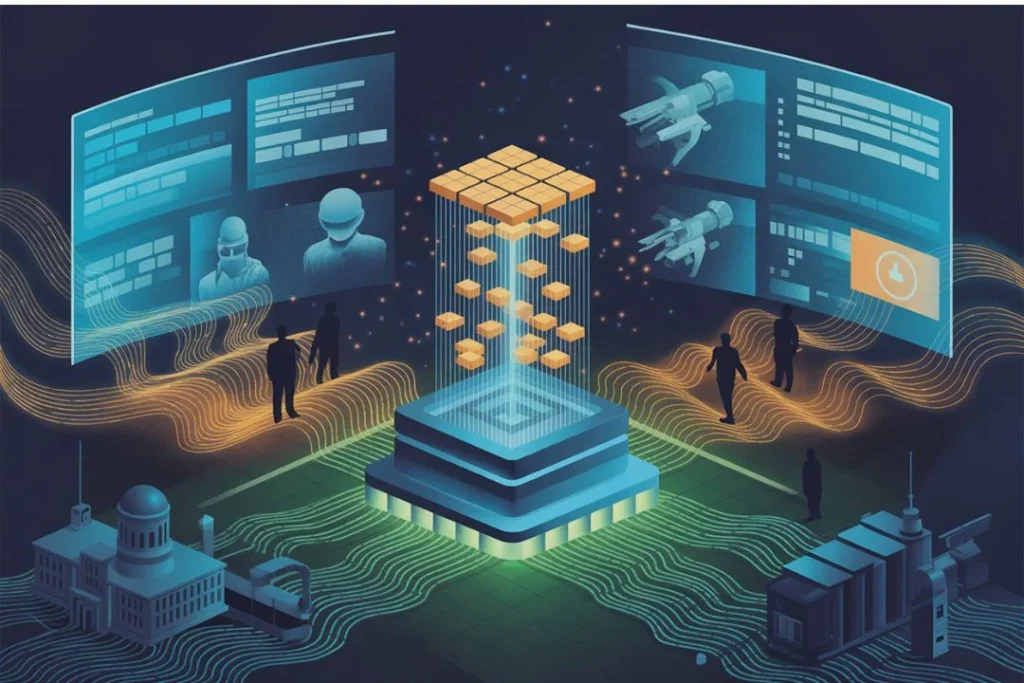
Quantum computers could have a huge impact on national security because they could allow adversaries to gain access to sensitive defense information. This could pose serious threats, especially to intelligence agencies and military networks.
When will quantum computers be fully introduced?
Quantum computers are still in the development stages, and the technology may take some time to become fully developed. However, the pace of research and development around the world has accelerated, and the technology is likely to become more widely used in the next 10 to 20 years.
(Conclusion)
Quantum computing is an extremely powerful technology that could revolutionize many areas in the future, but the risks associated with it can also be serious. To address these risks, we need advanced security measures, research, and legislation so that we can fully utilize the benefits of this technology and minimize its negative impacts.