Introduction
Cloud compliance has become an important part of managing modern business technology. As companies move their data and applications to cloud platforms, they must follow relevant laws, regulations, and security standards. These requirements help organizations protect sensitive information and maintain customer trust. Cloud compliance also reduces the risk of legal penalties and data breaches. Understanding its importance allows businesses to use cloud services responsibly and securely.
1. What Is Cloud Compliance?
Cloud compliance refers to following the rules, regulations, and industry standards that apply to cloud-based systems and data. It ensures that organizations manage their digital information according to established legal and security requirements. These rules may cover data privacy, access control, storage, and information sharing. Businesses must understand which requirements apply to their operations. A clear compliance strategy helps them maintain secure and reliable cloud environments.
2. Importance of Cloud Compliance
Cloud compliance is essential because businesses increasingly depend on online platforms to store and process important information. Without proper controls, sensitive data may become exposed to unauthorized individuals. Compliance helps organizations establish consistent security practices and reduce operational risks. It also demonstrates a commitment to protecting customers, employees, and business partners. By following appropriate requirements, companies can strengthen their reputation and build long-term trust.
3. Cloud Compliance Standards and Regulations
Different industries and regions have specific requirements for protecting information in cloud environments. For example, GDPR addresses personal data protection in the European Union, while HIPAA establishes requirements for protecting certain health information in the United States. ISO 27001 provides a framework for managing information security, and PCI DSS applies to organizations handling payment card data. Not every standard applies to every business. Companies should identify the regulations relevant to their location, industry, and activities.
4. Data Protection in Cloud Computing
Data protection is one of the central elements of cloud compliance. Businesses should protect information throughout its lifecycle, from collection and storage to processing and deletion. Encryption can help safeguard data while it is being transmitted or stored. Access permissions should ensure that only authorized users can view sensitive information. Regular backups and secure deletion procedures also support responsible data management. These measures help organizations reduce the impact of accidental exposure and unauthorized access.
5. Cloud Security and Compliance
Cloud security and cloud compliance are closely connected, but they serve different purposes. Cloud security focuses on protecting systems, applications, networks, and information from threats. Cloud compliance ensures that relevant legal, regulatory, and industry requirements are met. Security controls, such as multifactor authentication and network monitoring, can support both objectives. However, having strong security tools does not automatically guarantee compliance. Organizations must also document their practices and verify that their controls satisfy applicable requirements.
6. The Role of Cloud Service Providers
Cloud service providers offer infrastructure, storage, software, and other services that businesses use to operate online. Many providers maintain certifications and security programs that can help customers meet their compliance obligations. However, organizations should not assume that choosing a compliant provider makes their entire operation compliant. Responsibilities are often shared between the provider and the customer. Businesses must review service agreements, understand responsibility boundaries, and configure their cloud resources correctly.
7. Common Cloud Compliance Challenges
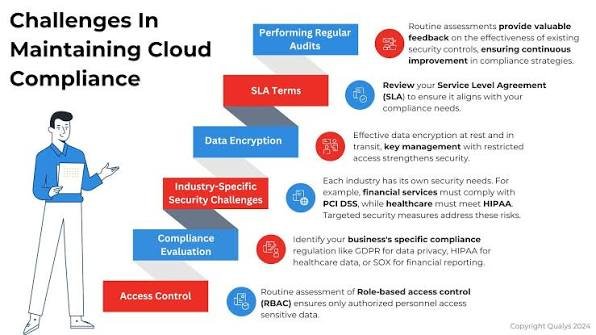
Organizations may face several challenges when managing compliance in cloud environments. These include changing regulations, complex technical systems, limited staff expertise, and unclear responsibility between service providers and customers. Companies operating in multiple countries may also need to address different legal requirements. Poor documentation can make it difficult to demonstrate compliance during an audit. To manage these challenges, businesses should establish clear procedures, assign responsibilities, and review their compliance practices regularly.
8. Cloud Compliance Risk Management
Risk management helps organizations identify and address issues that could affect their compliance status. Businesses should assess which information is most sensitive and determine how it could be exposed or misused. They can then prioritize safeguards according to the likelihood and potential impact of each risk. Regular risk assessments help identify weaknesses before they lead to serious problems. A documented risk management process also supports informed decision-making and improves the organization’s ability to respond to security incidents.
9. Cloud Compliance Audits
Cloud compliance audits evaluate whether an organization’s practices meet applicable requirements. During an audit, reviewers may examine security policies, access records, system configurations, incident reports, and other evidence. Audits can reveal missing controls and areas that need improvement. Organizations should maintain accurate documentation and keep evidence of their compliance activities. Internal reviews can prepare businesses for independent assessments and help them identify problems early. The frequency and scope of audits should reflect relevant regulations and business risks.
10. Automation in Cloud Compliance
Automation can make cloud compliance management more efficient and consistent. Specialized tools can monitor system configurations, detect policy violations, and generate reports about potential compliance gaps. Automated alerts can notify teams when a cloud resource becomes publicly accessible or an important security setting changes. This reduces the need for repeated manual checks. Nevertheless, automated systems require appropriate configuration and regular review. Human oversight remains important for interpreting findings, handling exceptions, and making decisions that require business or legal judgment.
11. Best Practices for Cloud Compliance
Businesses can improve cloud compliance by creating clear policies and reviewing them whenever their systems or obligations change. They should use strong authentication, restrict unnecessary access, encrypt sensitive information, and maintain reliable backups. Employee training can help prevent mistakes caused by phishing, weak passwords, or careless data handling. Organizations should also evaluate vendors and maintain records of important security activities. Combining these practices with regular assessments creates a more organized approach to protecting information and meeting compliance requirements.
12. The Future of Cloud Compliance
Cloud compliance will continue to develop as businesses adopt artificial intelligence, hybrid cloud systems, and more advanced digital services. New technologies can introduce additional questions about data ownership, privacy, security, and accountability. Organizations will need to monitor regulatory changes and update their internal procedures accordingly. Better monitoring and automated reporting may simplify some compliance tasks, but they will not remove the need for responsible management. Businesses that build compliance into their daily operations will be better prepared to adapt to changing requirements.
Conclusion
Cloud compliance helps organizations manage cloud technology responsibly while meeting relevant legal and industry requirements. It supports data protection, strengthens security practices, and encourages greater accountability. Businesses should understand their obligations, select suitable service providers, and regularly assess their cloud environments. Automation and employee awareness can make compliance activities more effective. With a practical and consistent approach, organizations can reduce risks and build greater confidence in their cloud-based operations.
Frequently Asked Questions (FAQs)
1. Why is cloud compliance important?
Cloud compliance helps businesses protect sensitive information, meet applicable legal obligations, reduce security risks, and maintain customer confidence. It also provides a structured way to review and improve cloud management practices.
2. What are some common cloud compliance standards?
Common examples include GDPR, HIPAA, ISO 27001, and PCI DSS. Their applicability depends on factors such as the organization’s industry, location, data types, and business activities.
3. How can a business improve cloud compliance?
A business can improve cloud compliance by identifying applicable requirements, reviewing its cloud provider’s responsibilities, implementing appropriate security controls, training employees, maintaining documentation, and conducting regular compliance assessments.