Introduction
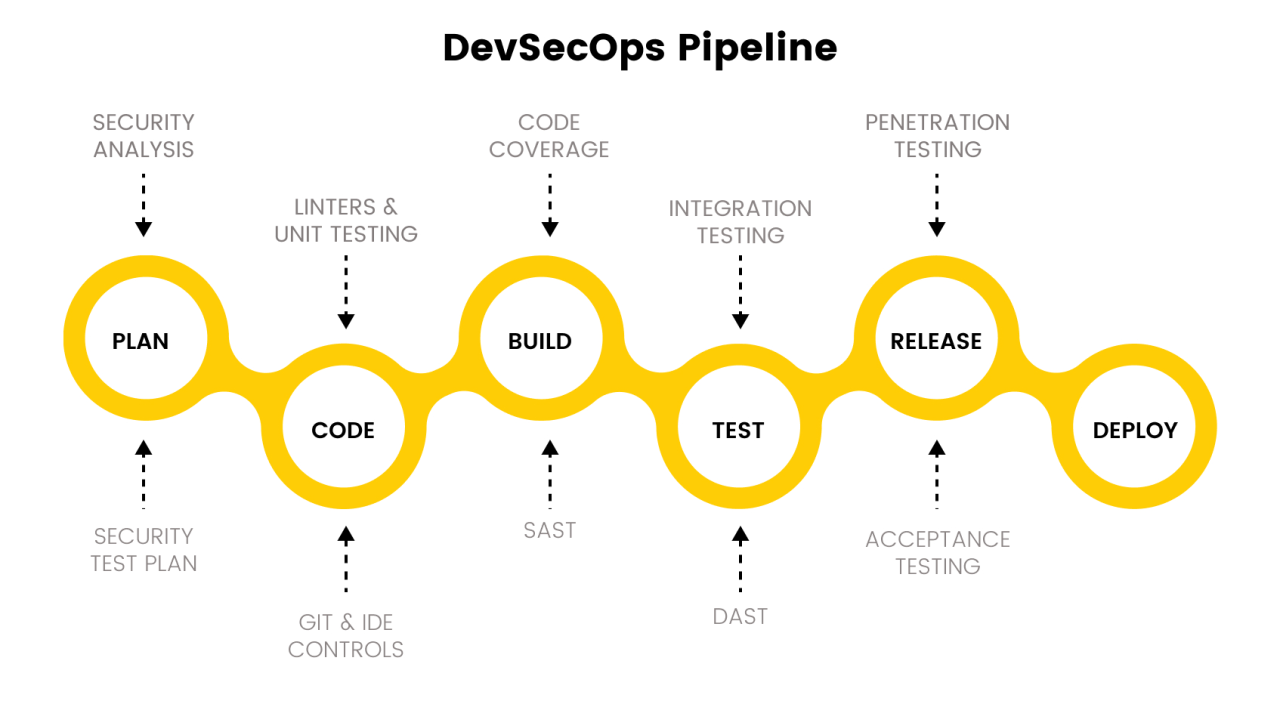
DevSecOps practices help organizations integrate security into every stage of the software development lifecycle.
They combine development, security, and operations to create safer and more reliable applications.
Instead of treating security as a final step, DevSecOps makes it a shared responsibility across teams.
This approach helps identify vulnerabilities early and reduces the cost of fixing security issues.
By adopting effective DevSecOps practices, businesses can deliver software faster without compromising security.
1. Understanding DevSecOps Practices
DevSecOps practices focus on building security into software development from the beginning.
They encourage developers, security specialists, and operations teams to work together throughout the development process.
This collaboration helps organizations identify potential risks before they become serious problems.
Traditional security methods often involve testing applications near the end of development, which can delay releases.
DevSecOps addresses this challenge by making security checks a regular part of everyday workflows.
It also promotes continuous improvement through automation, monitoring, and shared responsibility.
As a result, teams can develop applications that are more secure, stable, and dependable.
A well-planned DevSecOps strategy supports both business goals and long-term security requirements.
2. Importance of DevSecOps in Software Development
Modern software applications face various threats, including data breaches, malware, and unauthorized access.
DevSecOps practices help reduce these risks by introducing security measures throughout the software lifecycle.
When security issues are detected early, teams can resolve them before applications reach production.
This reduces expensive rework and helps prevent disruptions after deployment.
Another important benefit is improved communication between development and security teams.
Rather than working independently, team members share information and take collective responsibility for protecting software.
DevSecOps also supports faster releases by automating repetitive security tasks.
These advantages make it a valuable approach for organizations developing and maintaining modern digital products.
3. Security Automation in DevSecOps
Security automation is one of the most important elements of successful DevSecOps practices.
It allows teams to perform security checks automatically during development, testing, and deployment.
Automated tools can identify vulnerable dependencies, exposed secrets, insecure configurations, and common coding errors.
These checks can be integrated into continuous integration and continuous delivery pipelines.
When a problem is detected, developers receive feedback before the affected code moves further through the pipeline.
This shortens the time required to identify and correct security weaknesses.
Automation also helps maintain consistent security standards across multiple projects and environments.
However, automated results should still be reviewed by qualified professionals when human judgment is necessary.
4. Continuous Integration and Continuous Delivery Security
Continuous integration and continuous delivery, commonly known as CI/CD, help teams build, test, and release software efficiently.
DevSecOps strengthens these pipelines by incorporating security checks into their regular activities.
For example, every code change can trigger automated testing and vulnerability scanning.
Pipeline policies can prevent deployments when critical security requirements are not satisfied.
Teams can also verify access permissions, review deployment configurations, and protect sensitive credentials.
These controls help reduce the chance of releasing insecure code into production environments.
A secure CI/CD pipeline makes security testing more consistent and easier to repeat.
It also enables organizations to maintain development speed while improving the overall quality of software releases.
5. Vulnerability Management and Risk Assessment
Vulnerability management involves identifying, evaluating, prioritizing, and resolving security weaknesses.
Within DevSecOps, this process begins during development and continues after an application is deployed.
Security teams may use code analysis, dependency scanning, container scanning, and penetration testing to discover potential problems.
Not every vulnerability presents the same level of risk, so prioritization is essential.
Teams should consider factors such as severity, exploitability, business impact, and exposure to external threats.
Critical vulnerabilities should receive prompt attention, while lower-risk findings can be addressed according to a defined schedule.
Maintaining an accurate record of security findings helps teams track remediation progress.
A structured vulnerability management process improves visibility and supports better security decisions.
6. Secure Coding Standards and Developer Training
Secure coding is a fundamental part of DevSecOps because many security problems originate in application code.
Developers should understand common weaknesses such as injection attacks, broken access controls, and improper input validation.
Organizations can establish coding standards that explain how to handle authentication, authorization, data protection, and error messages.
Code reviews help team members identify insecure patterns before changes are approved.
Static application security testing tools can provide additional feedback during development.
Regular training keeps developers informed about emerging threats and recommended security techniques.
Practical exercises can also help teams understand how attackers exploit software weaknesses.
When secure coding becomes part of everyday development, applications are more likely to withstand common attacks.
7. Infrastructure as Code and Configuration Security
Infrastructure as Code, or IaC, allows organizations to manage infrastructure through version-controlled configuration files.
This approach makes it easier to create consistent development, testing, and production environments.
However, incorrect configurations can expose cloud resources, databases, and other important systems to security threats.
DevSecOps practices address these risks by scanning infrastructure templates before deployment.
Automated checks can detect overly permissive access rules, publicly exposed resources, and insecure settings.
Teams should also apply least-privilege access, secure configuration baselines, and regular configuration reviews.
Version control makes infrastructure changes easier to audit and investigate.
By protecting infrastructure definitions, organizations can reduce configuration errors and strengthen their overall security posture.
8. Secrets Management and Data Protection
Secrets management protects sensitive information such as passwords, API keys, encryption keys, and access tokens.
Storing these values directly in source code can expose them to unauthorized users and attackers.
DevSecOps teams should use dedicated secrets management solutions to store and distribute confidential credentials securely.
Access to secrets should be restricted according to job responsibilities and application requirements.
Organizations should also rotate credentials when appropriate and revoke compromised secrets immediately.
Encryption helps protect sensitive information both during transmission and while stored.
Automated secret scanning can detect accidentally committed credentials before they cause further damage.
Strong secrets management reduces the risk of unauthorized access and supports safer application development.
9. Container and Cloud Security
Containers and cloud platforms provide flexibility, scalability, and faster application deployment.
At the same time, they introduce security challenges involving images, permissions, networks, and runtime configurations.
DevSecOps practices help teams examine container images for vulnerable packages and unnecessary components.
Organizations should use trusted base images and update dependencies regularly.
Cloud environments also require carefully managed identities, permissions, network rules, and storage settings.
Runtime monitoring can help detect unusual activities after an application has been deployed.
Teams should regularly review cloud configurations and remove resources that are no longer required.
Combining preventive controls with continuous monitoring helps protect modern cloud-native applications.
10. Continuous Security Monitoring and Incident Response
Security does not end when software is released into production.
Applications require ongoing monitoring to identify suspicious activity, configuration changes, and newly discovered vulnerabilities.
DevSecOps teams can collect relevant logs and security events from applications, infrastructure, and cloud services.
Monitoring tools can help detect unusual access patterns and potential attacks.
Organizations should define incident response procedures before a security event occurs.
These procedures should explain how to investigate incidents, contain threats, recover services, and communicate findings.
After an incident, teams should review its causes and improve controls to prevent similar problems.
Continuous monitoring and effective response planning help organizations maintain security throughout an application’s operational life.
11. Compliance, Governance, and Security Policies
Organizations often need to follow security standards, privacy requirements, and industry-specific regulations.
DevSecOps practices can make compliance easier by integrating relevant controls into development and deployment workflows.
Automated policy checks can verify whether applications and infrastructure meet defined security requirements.
Version-controlled records, test results, and deployment logs can provide useful evidence for audits.
Teams should establish clear policies for access management, data handling, vulnerability remediation, and software releases.
These policies must be reviewed regularly to reflect changes in technology and business requirements.
Security governance should guide teams without creating unnecessary barriers to productive work.
A balanced approach helps organizations improve accountability while maintaining efficient software delivery.
12. Best Practices for Successful DevSecOps Implementation
Successful DevSecOps implementation requires a combination of appropriate tools, skilled employees, and clear processes.
Organizations should begin by assessing their current security practices and identifying the most important risks.
They can then introduce automated scanning, secure coding standards, and security checks within CI/CD pipelines.
Teams should prioritize high-impact vulnerabilities instead of treating every finding as equally urgent.
Security responsibilities must be clearly defined, while developers should receive practical and ongoing training.
Organizations should also measure results using indicators such as remediation time, vulnerability trends, and pipeline security failures.
Starting with manageable improvements allows teams to learn and expand their approach over time.
Regular reviews ensure that DevSecOps practices continue to support changing business needs and emerging security threats.
Conclusion
DevSecOps practices make security an essential part of modern software development and delivery.
They help organizations identify vulnerabilities earlier, automate repetitive checks, and improve collaboration across teams.
Practices such as secure coding, secrets management, infrastructure scanning, and continuous monitoring strengthen application protection.
Successful implementation requires consistent processes, appropriate tools, employee awareness, and regular improvement.
By making security a shared responsibility, organizations can deliver reliable software while reducing avoidable risks.
Frequently Asked Questions (FAQs)
1. What are DevSecOps practices?
DevSecOps practices are methods used to integrate security into software development, testing, deployment, and maintenance. They include automated security testing, secure coding, vulnerability management, and continuous monitoring.
2. What are the main benefits of DevSecOps?
The main benefits include early vulnerability detection, faster remediation, improved collaboration, more consistent security checks, and reduced security-related rework. These practices also help organizations deliver software more confidently.
3. How can an organization start implementing DevSecOps?
An organization can begin by reviewing its existing development process, introducing automated security scans, training developers in secure coding, and adding security checks to CI/CD pipelines. It should then measure results and gradually improve its security processes.