In today’s digital world, applications are more than lines of code running on a server. They are complex systems built with third-party libraries, cloud infrastructure, APIs, containers, and automated deployment pipelines. While these technologies help businesses develop and deliver software faster, they also introduce new security challenges that organizations must address throughout the application lifecycle.
A small vulnerability in source code, an outdated software dependency, or a misconfigured cloud resource can create an opportunity for attackers. As applications become more interconnected, protecting them requires a broader approach that covers everything from the first line of code to the infrastructure supporting the application in production.
This is where application security becomes essential. Instead of treating security as a final step before release, organizations need to integrate protective measures into development, testing, deployment, and ongoing operations.
The good news is that strengthening application security does not always require expensive tools or complicated processes. With the right practices, development teams can reduce vulnerabilities, protect sensitive information, and build applications that are more resilient against evolving cyber threats.
In this article, we explore practical strategies organizations can use to strengthen application security from code to cloud.
1. Make Security Part of the Development Process
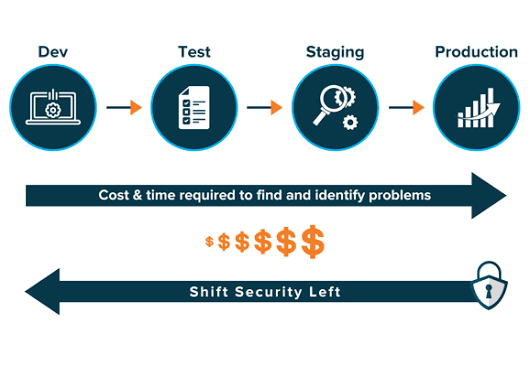
One of the most effective ways to improve application security is to address potential weaknesses before they reach production. Fixing a vulnerability during development is generally easier than dealing with an incident after an application has been deployed.
Traditionally, security testing often happened near the end of the development cycle. This approach could delay releases and force developers to make significant changes when problems were discovered late.
Modern development teams increasingly follow a shift-left approach, which introduces security checks earlier in the software development lifecycle.
Developers should consider security when planning features, designing application architecture, writing code, and reviewing changes. Security requirements should be treated as part of the definition of a completed feature rather than optional improvements.
For example, when building an application that handles customer information, developers should determine how authentication will work, which users can access specific records, and how sensitive data will be protected.
These decisions are easier to implement correctly when they are made before the application becomes dependent on insecure design choices.
Organizations can support this approach by introducing secure coding guidelines, conducting lightweight threat-modeling exercises, and including security-focused questions in code reviews.
Making security part of everyday development helps teams identify weaknesses early without turning every project into a lengthy security assessment.
2. Follow Secure Coding Practices
Application security begins with the quality of the code itself. Even a well-designed cloud environment cannot fully protect an application that contains serious coding vulnerabilities.
Common problems include injection attacks, broken access controls, insecure authentication, improper input validation, and unsafe error handling.
Developers should follow established secure coding practices that reduce these risks.
Input validation is an important starting point. Applications should treat user-submitted data, API requests, uploaded files, and external service responses as untrusted until they have been appropriately validated.
For database operations, parameterized queries help prevent SQL injection by separating data from executable query instructions. Output encoding and context-appropriate sanitization can reduce cross-site scripting risks.
Authentication and authorization also require careful attention. An application should verify a user’s identity and independently confirm that the user has permission to perform the requested action.
For example, hiding an administrative button in the user interface does not prevent an unauthorized user from calling the corresponding API directly. Access restrictions must be enforced on the server.
Developers should also avoid exposing stack traces, internal configuration details, or sensitive information through error messages.
Code reviews, secure development guidelines, and practical training can help teams apply these principles consistently. Organizations should also use recognized references, such as the OWASP Top 10, to understand common web application security risks.
The goal is to make secure coding a routine engineering practice rather than something developers consider only after a vulnerability has been discovered.
3. Protect Third-Party Dependencies and Open-Source Components
Modern applications rarely rely entirely on code written in-house. Development teams use open-source libraries, frameworks, package managers, and external components to speed up development and reduce repetitive work.
Although these dependencies provide significant benefits, they can introduce security weaknesses that are difficult to detect without appropriate visibility.
An outdated library may contain a known vulnerability, while a compromised package could introduce malicious code into an otherwise legitimate application.
Organizations should maintain an inventory of their software dependencies and use Software Composition Analysis (SCA) tools to identify known vulnerabilities.
Dependency versions should be managed carefully, using lockfiles or equivalent controls where appropriate to make builds more predictable. Teams should also evaluate whether packages are actively maintained and obtain them from trusted sources.
Automated dependency updates can help keep applications current, but updates should still be tested to identify compatibility problems and unexpected changes.
A Software Bill of Materials (SBOM) can provide an inventory of components included in an application. This becomes particularly useful when a newly disclosed vulnerability affects a widely used library and organizations need to identify which applications may be exposed.
Security teams should prioritize dependency findings according to severity, exploitability, exposure, and business impact rather than treating every alert as equally urgent.
By managing third-party components throughout their lifecycle, organizations can reduce software supply chain risks and improve their ability to respond when new vulnerabilities emerge.
4. Integrate Automated Security Testing Into CI/CD Pipelines
Continuous Integration and Continuous Delivery (CI/CD) pipelines help development teams build, test, and deploy software efficiently. They also provide an excellent opportunity to automate important security checks.
When security testing is integrated into the pipeline, vulnerabilities can be identified as code changes move through development and testing.
Several testing techniques can provide complementary protection:
- Static Application Security Testing (SAST): Examines source code for potentially insecure coding patterns.
- Software Composition Analysis (SCA): Identifies known vulnerabilities in third-party dependencies.
- Secret scanning: Detects accidentally exposed API keys, passwords, and other credentials.
- Infrastructure as Code scanning: Identifies insecure configurations in infrastructure definitions.
- Dynamic Application Security Testing (DAST): Tests running applications for certain security weaknesses.
- Container image scanning: Detects known vulnerabilities in container images and their components.
These tools should be integrated thoughtfully. Fast checks can run during pull requests, while more extensive tests can be performed in staging environments or before release.
Organizations should define clear policies for handling security findings. Confirmed critical vulnerabilities may require a build or deployment to be blocked, while lower-risk findings can be tracked for remediation.
It is equally important to provide useful feedback. Developers need to understand what a tool detected, why the issue matters, and how to fix it.
Automated testing is most effective when it helps teams identify and resolve problems quickly rather than generating large volumes of alerts that nobody has time to review.
5. Strengthen Authentication and Access Control
Authentication and access control are essential to protecting applications, especially those that process personal information, financial records, or confidential business data.
Authentication establishes who a user or service is. Authorization determines what that identity is permitted to do.
Weaknesses in either area can expose sensitive information or allow unauthorized actions.
Organizations should use well-established authentication mechanisms and require multifactor authentication for privileged accounts and other high-risk access wherever appropriate.
Password policies should encourage strong, unique credentials and secure password storage using suitable password-hashing algorithms. Applications should also implement protections against automated login attempts, credential stuffing, and account enumeration where relevant.
Authorization requires equally careful design. Access decisions should be enforced on the server and evaluated for each sensitive operation.
For example, a customer who can view their own account information should not automatically be able to retrieve another customer’s information by changing an identifier in an API request.
Role-based or attribute-based access control can help organizations express permissions consistently. However, permissions should still be reviewed regularly to ensure that users and services do not accumulate unnecessary privileges.
Session management also matters. Applications should protect session tokens, use secure cookie settings where applicable, and invalidate sessions appropriately when users log out or access is revoked.
Strong identity controls reduce the likelihood that compromised accounts or authorization mistakes will lead to a wider security incident.
6. Secure APIs and External Integrations
APIs allow applications to communicate with mobile clients, business partners, cloud services, and other systems. As a result, API security has become a critical part of application protection.
An API may expose sensitive functionality even when the user interface appears secure. Attackers can interact directly with endpoints, inspect requests, and attempt to bypass restrictions.
Organizations should begin by maintaining an inventory of their APIs, including internal endpoints, public interfaces, and older versions that may no longer be actively maintained.
Every sensitive API operation should enforce appropriate authentication and authorization. Teams should also validate input, limit resource consumption, and apply suitable rate limiting to reduce abuse.
Sensitive data should not be returned simply because it exists in an underlying database. APIs should expose only the information required for the intended operation.
For example, a customer profile endpoint may need to return a name and contact preference without exposing internal account notes or security-related metadata.
API gateways can help enforce consistent controls, but they do not replace security checks within the application itself.
Organizations should also protect API credentials, verify external service connections, and monitor unusual request patterns.
Regular API testing can reveal issues such as broken object-level authorization, excessive data exposure, and insufficient access restrictions.
By treating APIs as security-critical interfaces, organizations can reduce the risk of unauthorized access across interconnected systems.
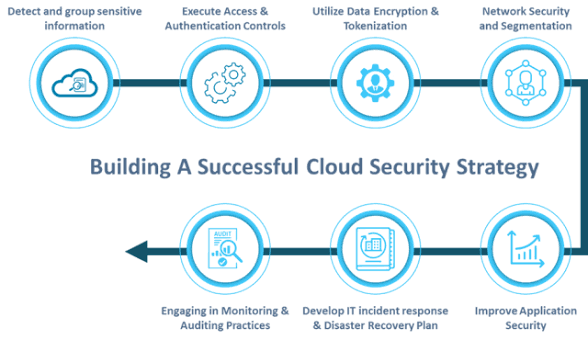
7. Apply Cloud Security Best Practices
Moving applications to the cloud provides flexibility, scalability, and access to managed services. However, cloud environments also introduce security responsibilities that organizations must understand and manage.
Misconfigured storage, excessive permissions, exposed management interfaces, and insecure network rules can create opportunities for attackers.
One of the most important principles is least privilege. Cloud users, applications, and automated workflows should receive only the permissions necessary to perform their assigned tasks.
Organizations should avoid using overly broad administrative permissions for routine operations. Separate roles and identities can help reduce the impact of compromised accounts.
Cloud resources should be configured securely by default. Storage services containing sensitive information should not be publicly accessible unless there is a clearly justified requirement and appropriate protection.
Network security groups, firewall rules, private endpoints, and segmentation can help restrict unnecessary access between services.
Infrastructure as Code tools allow teams to define cloud resources through version-controlled configuration files. Scanning these files before deployment can help detect risky settings before they reach production.
Organizations should also review cloud security posture regularly because configuration changes can introduce new weaknesses over time.
The shared responsibility model is important here. Cloud providers secure aspects of the underlying infrastructure, while customers remain responsible for the security controls assigned to them, including many identity, application, and data-protection responsibilities.
Understanding this division helps organizations avoid assuming that using a reputable cloud provider automatically makes their applications secure.
8. Manage Secrets and Sensitive Information Properly
Applications often need credentials to connect to databases, communicate with external APIs, access cloud services, or perform deployment tasks.
If these credentials are exposed, attackers may use them to access systems, steal data, or move deeper into the environment.
A common mistake is storing secrets directly in source code, configuration files, container images, or build scripts.
Instead, organizations should use dedicated secrets-management services and retrieve credentials securely when needed. Access should be limited to the specific application or process that requires each secret.
Short-lived credentials and workload identity mechanisms can reduce reliance on long-lived access keys.
Secrets should also be excluded from logs, error messages, and debugging output. Development and testing environments should not automatically receive unrestricted access to production credentials.
Automated secret scanning can detect accidental exposure in repositories, but organizations need a clear response process as well.
If a secret is exposed, it should be revoked or rotated promptly, and the team should investigate whether it was accessed by an unauthorized party.
Sensitive data also needs protection beyond credentials. Organizations should collect only the information they need, restrict access to it, and apply appropriate encryption and retention policies.
Effective secret management reduces the risk that a single coding mistake or configuration error will compromise a larger system.
9. Secure Containers and Cloud-Native Workloads
Containers have become a common way to package and deploy applications. They provide consistency across environments, but they can also carry vulnerabilities and insecure configurations into production.
Container images may contain outdated operating system packages, unnecessary tools, or vulnerable dependencies. Teams should use trusted base images, scan images before deployment, and update components when security fixes become available.
Minimal images can reduce the number of unnecessary components, although they should still be maintained and assessed for vulnerabilities.
Organizations should also avoid running containers with unnecessary privileges. Where supported, appropriate controls include running as a non-root user, limiting Linux capabilities, using read-only filesystems, and restricting access to sensitive host resources.
In Kubernetes environments, role-based access control should be configured carefully, service accounts should have limited permissions, and network policies should restrict unnecessary communication between workloads.
Secrets should not be embedded directly into container images, and deployment policies should prevent prohibited configurations from reaching production.
Security must also continue after deployment. Runtime monitoring can help detect unexpected processes, suspicious network activity, and unusual changes in workload behavior.
Container scanning alone cannot guarantee that a workload is safe. Effective protection requires a combination of secure images, appropriate runtime settings, controlled deployment processes, and ongoing monitoring.
10. Use Encryption and Protect Data Throughout Its Lifecycle
Applications frequently process sensitive information, including personal details, payment records, business documents, and authentication data. Protecting this information requires controls that apply both while data is moving between systems and while it is stored.
Encryption in transit helps protect information from interception during communication. Organizations should use appropriately configured TLS for external connections and internal service communication where required by the threat model.
Encryption at rest helps protect stored information against certain forms of unauthorized access, particularly when storage media or backups are exposed.
However, encryption alone does not solve every data security problem. Access controls, key management, secure application logic, and monitoring are equally important.
Encryption keys should be protected separately from the data they secure. Organizations may use managed key services or hardware security modules depending on their requirements.
Teams should also avoid collecting sensitive information unnecessarily. Reducing the amount of data stored can limit the potential impact of a breach.
Data retention policies should specify how long information is kept and when it must be securely deleted. Backups should receive appropriate protection and be included in recovery testing.
For applications that handle personal information, privacy requirements should be considered during design rather than addressed only after deployment.
A comprehensive data-protection strategy combines encryption, access restrictions, careful data handling, and appropriate lifecycle management.
11. Implement Continuous Monitoring and Threat Detection
Even applications built with strong security practices can contain undiscovered vulnerabilities. Attackers may also exploit compromised credentials, newly disclosed weaknesses, or unexpected configuration changes.
Continuous monitoring helps organizations identify suspicious activity and respond before an incident causes extensive damage.
Applications and supporting infrastructure should generate useful security logs. These may include authentication events, authorization failures, administrative actions, configuration changes, and relevant application errors.
Logs should be protected against unauthorized modification and retained according to operational, security, and compliance requirements.
Security Information and Event Management systems can collect and analyze events from multiple sources, helping teams identify patterns that may indicate an attack.
For example, a sudden increase in failed login attempts followed by successful access to a privileged account may warrant investigation.
Cloud-native monitoring tools can also identify risky configurations, suspicious activity, and changes to important resources.
Organizations should establish clear processes for reviewing alerts, investigating incidents, and escalating high-risk events. An alert is useful only if someone can assess it and take appropriate action.
Regular incident response exercises can help teams practice isolating affected systems, revoking compromised credentials, preserving evidence, and restoring normal operations.
Monitoring should support both immediate threat detection and long-term learning. Insights from production incidents can reveal gaps in application design, testing, or deployment controls.
12. Integrate Security Into the DevSecOps Culture
Technology is an important part of application security, but organizational culture also plays a major role.
If developers believe that security is exclusively the responsibility of a separate department, they may overlook risks during implementation. Similarly, if security teams introduce controls without understanding development workflows, their recommendations may create unnecessary friction.
DevSecOps addresses this challenge by bringing development, security, and operations together around shared responsibility.
Developers should receive practical guidance on secure coding and common vulnerabilities. Security professionals should provide timely support, help teams prioritize findings, and explain how controls reduce risk.
Operations teams should contribute their knowledge of deployment environments, infrastructure configuration, and production behavior.
Security champions can help bridge these groups by supporting colleagues and encouraging secure development practices within individual teams.
Organizations should also promote a culture in which employees can report security concerns without fear of unfair blame.
When incidents occur, teams should investigate the contributing factors and identify improvements to tools, processes, and training.
The aim is not to make every developer a security specialist. It is to ensure that security is considered in everyday decisions and that expert support is available when needed.
13. Prepare for Emerging AI-Related Security Risks
Artificial intelligence is changing how developers write code, test applications, and manage infrastructure. AI-powered assistants can improve productivity, but their output introduces security considerations that organizations should not overlook.
Generated code may contain insecure patterns, incorrect assumptions, or outdated recommendations. Developers should review AI-generated code just as carefully as code written manually.
Organizations should also assess the permissions granted to AI development tools. A tool that can access private repositories, execute commands, or interact with cloud resources may create additional risks if its permissions are too broad.
Sensitive source code, credentials, and confidential customer information should not be submitted to external AI services unless the use is permitted by organizational policies and appropriate safeguards are in place.
Applications that incorporate AI features require additional consideration. Depending on their design, they may be vulnerable to prompt injection, sensitive information disclosure, unsafe tool execution, or inappropriate reliance on untrusted model output.
Teams should establish clear boundaries around what AI systems can access and which actions require independent validation or human approval.
AI-related security practices should evolve as technologies change. Regular assessments, access reviews, and testing can help organizations adopt useful capabilities without creating unnecessary exposure.
14. Establish a Practical Application Security Roadmap
Strengthening application security can seem overwhelming, particularly for organizations managing many applications, cloud accounts, and development teams.
The most effective approach is to begin with the highest risks and improve security incrementally.
A practical roadmap includes the following steps:
Step 1: Assess the current environment.
Identify critical applications, sensitive data, exposed services, third-party dependencies, and existing security controls. Determine which systems would create the greatest business impact if compromised.
Step 2: Address foundational weaknesses.
Improve identity management, remove unnecessary permissions, protect secrets, patch known vulnerabilities, and correct high-risk cloud configurations.
Step 3: Integrate security into development.
Introduce secure coding standards, code reviews, automated scanning, dependency management, and security checks in CI/CD pipelines.
Step 4: Strengthen cloud and runtime protection.
Secure cloud configurations, harden container workloads, monitor production activity, and establish incident response procedures.
Step 5: Define ownership and remediation priorities.
Assign clear responsibility for security findings, establish risk-based remediation targets, and document exceptions.
Step 6: Measure progress and improve.
Review security metrics, gather developer feedback, investigate recurring vulnerabilities, and update controls as threats and systems evolve.
This roadmap should reflect the organization’s size, technical environment, regulatory obligations, and available resources. A small business may begin with a focused set of essential controls, while a large enterprise may need a coordinated strategy across multiple teams and cloud environments.
Consistency and measurable improvement are more valuable than implementing every possible security tool at once.
15. Measure Application Security Effectiveness
Security improvements should be evaluated through meaningful outcomes rather than the number of tools installed or scans completed.
Organizations can track metrics such as the time required to remediate critical vulnerabilities, the number of recurring security issues, the percentage of applications covered by automated testing, and the frequency of security incidents.
Cloud security teams can also monitor misconfiguration trends, privileged access, exposed resources, and the time needed to resolve high-risk findings.
Other useful indicators include the number of secrets exposed in repositories, the proportion of production workloads using approved configurations, and the effectiveness of incident response exercises.
These metrics should be interpreted in context. An increase in detected vulnerabilities may indicate better visibility rather than weaker security.
Teams should avoid using metrics to punish developers for reporting problems. Instead, measurements should help identify bottlenecks, improve processes, and direct resources toward the most important risks.
Qualitative feedback is valuable too. Developers can explain which security checks provide useful guidance and which processes create unnecessary delays.
By combining quantitative measurements with practical feedback, organizations can determine whether their security program is becoming more effective over time.
Conclusion
Strengthening application security from code to cloud requires a continuous approach that connects secure development, reliable deployment, and effective production monitoring.
Secure coding practices help prevent common vulnerabilities. Dependency management reduces software supply chain risks. Automated testing identifies weaknesses before release, while strong identity controls and secrets management help protect sensitive resources.
Cloud security, container hardening, encryption, and continuous monitoring provide additional layers of defense. Just as importantly, collaboration between development, security, and operations teams ensures that these controls are applied consistently and improved over time.
Organizations should not assume that a secure codebase guarantees a secure application. Infrastructure changes, new vulnerabilities, compromised credentials, and evolving attack techniques can introduce risks long after deployment.
The most effective strategy combines prevention, detection, response, and continuous learning across the entire application lifecycle.
By starting with the most important risks, adopting practical security controls, and regularly measuring results, businesses can build applications that are more resilient, protect sensitive information, and maintain customer trust.
Ultimately, application security is not a single tool or final testing stage. It is an ongoing commitment to making safer decisions at every point where software is designed, built, deployed, and maintained.