Modern software development is moving faster than ever. Organizations rely on continuous integration, continuous delivery, cloud infrastructure, and automated testing to release applications quickly and respond to changing customer needs. While these technologies improve efficiency, they also introduce security challenges that cannot be solved through automation alone.
Many organizations have adopted security scanners, vulnerability detection tools, and automated compliance checks as part of their DevOps pipelines. These tools are valuable, but they are only one part of an effective security strategy. Even the most advanced automation cannot fully protect an organization if developers ignore security warnings, teams avoid reporting problems, or business priorities consistently push security concerns aside.
This is where a proactive DevSecOps culture becomes essential.
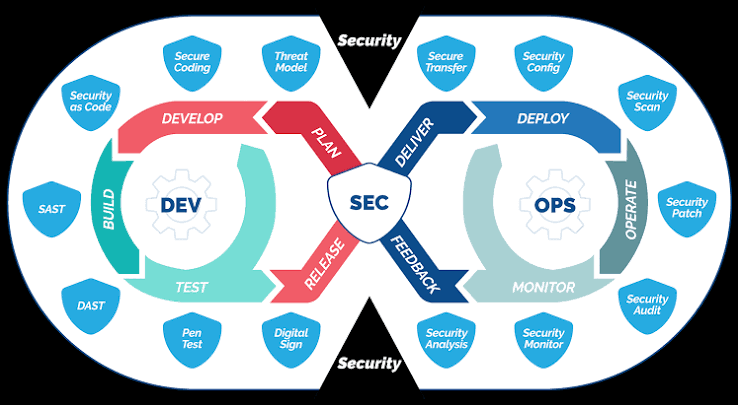
DevSecOps brings development, security, and operations together to make security a shared responsibility throughout the software development lifecycle. Rather than treating security as a final checkpoint before deployment, proactive DevSecOps encourages teams to identify risks early, learn from mistakes, and make informed security decisions during everyday development.
Building this culture requires more than introducing new tools. It involves changing team habits, improving communication, establishing clear responsibilities, and creating an environment where secure development becomes a natural part of delivering quality software.
1. Understand Why Automation Alone Is Not Enough
Automation has transformed how development teams identify and manage security risks. Static code analysis, dependency scanning, secret detection, and infrastructure configuration checks can identify problems much faster than manual reviews alone.
However, automated tools have limitations. They may produce false positives, miss context-dependent vulnerabilities, or identify problems without explaining how developers should resolve them.
For example, a security scanner might flag a dependency as vulnerable, but the development team may need to determine whether the affected functionality is actually used and whether the vulnerability creates a realistic risk in their environment.
If teams receive hundreds of alerts without clear priorities, they may begin ignoring findings altogether. This creates a situation in which security tools are technically working, but the organization is not becoming meaningfully safer.
A proactive DevSecOps culture addresses this problem by combining automation with human judgment, shared accountability, and continuous learning.
Automation should handle repeatable checks and provide timely feedback. Security professionals should help teams interpret complex findings, while developers should understand how their decisions affect the application’s security.
The objective is not to replace people with tools. It is to help people make better decisions by giving them useful information at the right time.
2. Make Security a Shared Responsibility
One of the biggest barriers to effective DevSecOps is the belief that security belongs exclusively to the security team.
In traditional development environments, developers may focus on delivering features while security specialists review vulnerabilities near the end of the process. This separation can create delays, misunderstandings, and disagreements about priorities.
A proactive DevSecOps approach encourages everyone involved in building and operating software to take responsibility for the security aspects of their work.
Developers should understand secure coding practices and recognize common vulnerabilities. Operations teams should maintain secure infrastructure and access controls. Security professionals should provide guidance, establish standards, and help teams manage complex risks.
Engineering managers and business leaders also have important roles. They must ensure that teams have sufficient time, resources, and support to address security issues rather than treating security as optional work.
For example, when a developer discovers an authorization weakness during implementation, the team should have a clear process for assessing and fixing it without unnecessary organizational delays.
Shared responsibility does not mean everyone must become a security expert. It means each person understands their role and knows when to seek additional expertise.
When security becomes part of ordinary engineering work, organizations are better positioned to prevent vulnerabilities before they reach production.
3. Introduce Security Early in the Development Lifecycle
A proactive security culture begins long before code enters a CI/CD pipeline.
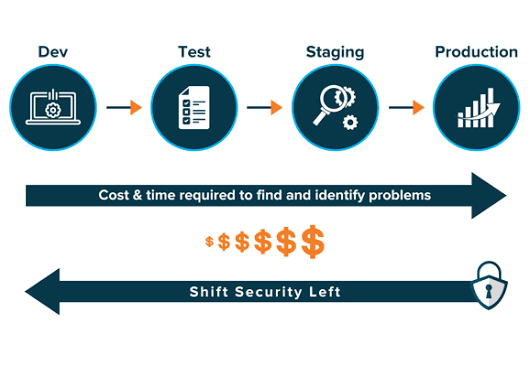
During planning and design, teams make decisions about authentication, authorization, data storage, third-party integrations, and system architecture. Mistakes at this stage can create weaknesses that are difficult and expensive to correct later.
Security should therefore be included in requirements discussions, design reviews, and technical planning.
Threat modeling is one practical way to accomplish this. It helps teams identify important assets, potential attackers, likely attack paths, and controls that can reduce risk.
For example, when developing an application that stores customer information, a team should consider who can access the data, how permissions are enforced, what happens if an account is compromised, and how sensitive information is protected.
These questions can be addressed before developers commit to an architecture that is difficult to change.
Teams can also maintain security acceptance criteria alongside functional requirements. A new feature might need to enforce specific authorization rules, validate untrusted input, or record important security events.
Early security involvement does not need to make planning complicated. Short design discussions, reusable threat-modeling templates, and clear security requirements can provide substantial value.
The earlier a weakness is identified, the more opportunities a team has to resolve it efficiently.
4. Build a Blameless Culture That Encourages Early Reporting
A healthy DevSecOps culture depends on psychological safety: team members should feel comfortable reporting mistakes, raising concerns, and asking for help without fearing unfair punishment.
If developers believe that reporting a security issue will damage their reputation, they may delay reporting it or attempt to fix it quietly. This can allow a manageable problem to become a larger incident.
A blameless culture does not mean ignoring responsibility or accepting repeated negligence. Instead, it focuses on understanding why a problem occurred and improving the systems that allowed it to happen.
Suppose a developer accidentally commits an API key to a repository. The immediate response should be to revoke or rotate the credential, investigate possible exposure, and determine whether any unauthorized access occurred.
After containing the issue, the team should examine how the exposure happened. Was secret scanning missing? Were developers unclear about credential management? Did the workflow encourage storing secrets in configuration files?
The answers can help the organization introduce preventive measures rather than relying entirely on individual caution.
Post-incident reviews should identify practical improvements, assign clear owners, and track remediation.
When people can raise concerns early, security teams gain better visibility into emerging risks, and organizations have more opportunities to prevent incidents.
5. Help Developers Learn Security Through Everyday Work
Security training is often delivered through occasional presentations or mandatory annual courses. Although these activities can provide useful background, they may not prepare developers to recognize and resolve vulnerabilities in their daily work.
A proactive DevSecOps culture makes security learning continuous and practical.
Developers benefit from short, relevant lessons that connect directly to the technologies and problems they encounter. Topics might include input validation, authentication, authorization, secure API design, dependency management, and secrets handling.
For example, when a code review identifies an insecure database query, the reviewer can explain why parameterized queries are safer and show how to implement them correctly.
Teams can also use secure coding workshops, internal demonstrations, hands-on exercises, and deliberately vulnerable training applications to build practical experience.
Security champions can provide another useful source of support. These are team members who develop additional security knowledge and help colleagues apply secure practices within their projects.
Security champions are not replacements for dedicated security professionals. They serve as accessible points of contact who can identify concerns early and help bridge the communication gap between engineering and security teams.
The most effective training is ongoing, relevant, and connected to actual development tasks. When developers understand the reasoning behind security controls, they are more likely to apply them consistently.
6. Reduce Alert Fatigue by Prioritizing Real Risks
Modern security tools can generate large volumes of findings across source code, dependencies, containers, cloud infrastructure, and running applications.
Without a clear prioritization process, developers may spend too much time reviewing low-impact alerts while serious vulnerabilities remain unresolved.
A proactive DevSecOps culture focuses on risk rather than treating every finding as equally important.
Teams should consider factors such as vulnerability severity, exploitability, exposure, the sensitivity of affected data, and the importance of the impacted system.
For example, a critical vulnerability in an internet-facing application may require immediate attention, particularly if a known exploit exists. A lower-severity issue in an isolated development environment may be handled through a different remediation schedule.
Security teams should also help developers distinguish confirmed vulnerabilities from false positives and document decisions when findings are accepted or deferred.
Automated policies can support this process by blocking changes that introduce high-risk issues while allowing lower-priority findings to be tracked for later remediation.
Exceptions should have clear owners, documented reasons, and expiration or review dates where appropriate. Otherwise, temporary exceptions can become permanent weaknesses.
Reducing alert fatigue is not about hiding problems. It is about ensuring that teams can identify and address the issues that matter most.
7. Make Secure Development the Easiest Path
Developers are more likely to follow secure practices when those practices fit naturally into their workflows.
If security requires multiple manual approvals, unfamiliar tools, or complicated procedures, teams may look for shortcuts when delivery deadlines become difficult to meet.
This is why proactive DevSecOps emphasizes developer experience.
Organizations can create reusable templates for secure application configurations, approved container images, infrastructure deployments, and CI/CD workflows. These templates allow teams to start with safer defaults rather than repeatedly solving the same security problems.
Internal developer platforms can also provide standardized ways to create repositories, configure services, manage secrets, and deploy applications.
For example, a secure project template might automatically include secret scanning, dependency checks, protected branches, and a standard build workflow.
Developers can then focus on implementing business functionality while essential security controls are included by default.
Clear documentation and useful error messages are equally important. When a pipeline blocks a deployment, it should explain what failed, why the control matters, and what the developer can do to resolve the issue.
The principle is simple: secure choices should be convenient, understandable, and supported by the development environment.
8. Integrate Security Into Code Reviews and Team Discussions
Code reviews provide an opportunity to evaluate more than functionality and coding style. They can also help teams identify security weaknesses before changes are merged.
However, security reviews are most effective when they are part of normal engineering discussions rather than an isolated process reserved for specialists.
Reviewers should consider whether the code handles untrusted input safely, enforces appropriate permissions, protects sensitive information, and avoids exposing unnecessary system details.
For example, a new API endpoint should be reviewed to confirm that users can access only the resources they are authorized to use. Simply checking whether a user is logged in may not be sufficient.
Teams can develop lightweight review checklists for common risk areas, particularly those relevant to their technology stack.
Security professionals can help create these checklists and provide guidance on complex changes involving authentication, cryptography, data access, or external integrations.
It is also important to keep reviews practical. Requiring an extensive security assessment for every minor code change may create unnecessary friction, while high-risk architectural changes deserve deeper examination.
By making security a regular part of code review, teams can share knowledge, improve code quality, and catch weaknesses earlier in the development process.
9. Strengthen Collaboration Between Development, Security, and Operations
DevSecOps works best when development, security, and operations teams communicate regularly instead of working through disconnected processes.
Each group brings different expertise. Developers understand application behavior, security professionals understand threats and controls, and operations teams understand deployment environments and production reliability.
When these perspectives are combined early, teams can identify risks that might otherwise remain unnoticed.
Regular security discussions can help teams review vulnerabilities, upcoming architectural changes, production incidents, and recurring operational problems.
Shared communication channels also make it easier to ask questions without waiting for formal meetings or lengthy approval processes.
For example, when a development team plans to introduce a new external service, a short discussion with security and operations specialists can clarify data-sharing risks, access requirements, logging needs, and deployment considerations.
Organizations should also establish clear escalation paths for urgent vulnerabilities. Teams need to know whom to contact, how quickly issues should be assessed, and who can make decisions about emergency fixes.
Collaboration becomes more effective when responsibilities are documented and teams work toward shared objectives rather than competing priorities.
10. Treat Infrastructure and Cloud Security as Continuous Responsibilities
Modern development teams frequently use cloud platforms, containers, Kubernetes, and infrastructure-as-code tools. These technologies offer flexibility and speed, but insecure configurations can expose entire environments.
A proactive DevSecOps culture treats infrastructure security as an ongoing engineering responsibility.
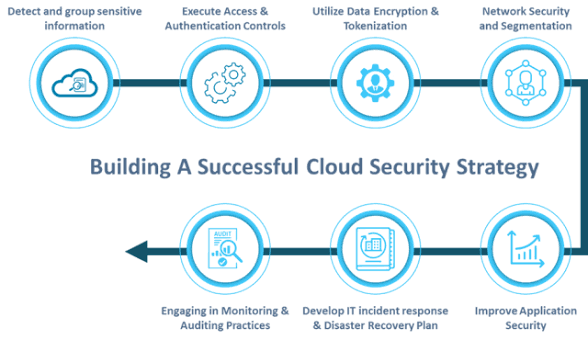
Teams should use least-privilege permissions, secure configuration templates, appropriate network restrictions, and centralized secrets management. Infrastructure-as-code changes should be reviewed and scanned before deployment.
Cloud environments should also be monitored for unexpected changes, publicly exposed resources, excessive permissions, and suspicious activity.
For example, if a storage resource becomes publicly accessible because of a configuration change, automated policy checks may detect the problem before deployment. Runtime monitoring can provide another layer of protection if a risky change reaches production.
Container security should follow the same principle. Teams should use trusted images, scan for vulnerabilities, limit runtime privileges, and keep components updated.
The goal is to prevent common misconfigurations through secure defaults while maintaining enough visibility to identify problems that arise later.
By combining preventive controls with continuous monitoring, organizations can reduce the likelihood that infrastructure weaknesses become serious security incidents.
11. Build Security Into Incident Response and Continuous Learning
Even organizations with mature DevSecOps practices can experience security incidents. Vulnerabilities may be discovered in production, credentials may be exposed, or attackers may find weaknesses that existing controls did not detect.
A proactive culture prepares teams to respond quickly and learn from these events.
Incident response plans should define how teams identify, assess, contain, investigate, and recover from security incidents. They should also explain how decisions are communicated and how evidence is preserved.
Regular exercises can help teams understand their responsibilities before an actual incident occurs.
For example, a simulated compromised credential exercise can test whether the organization can revoke access, identify affected systems, investigate suspicious activity, and restore secure operations.
After an incident, teams should conduct a structured review. The purpose is to understand what happened, which controls worked, what failed, and what changes would reduce the likelihood or impact of a similar event.
Lessons should feed back into the development process. A production incident might lead to a new automated test, a safer deployment template, improved monitoring, or additional developer training.
This creates a continuous improvement cycle in which operational experience strengthens future software development.
12. Measure Culture and Security Outcomes, Not Just Tool Usage
Organizations often measure DevSecOps maturity by counting installed tools, automated scans, or completed security training sessions. These measurements show activity, but they do not necessarily demonstrate that security outcomes are improving.
A proactive approach measures whether teams are identifying risks earlier, resolving vulnerabilities efficiently, and preventing recurring problems.
Useful metrics include:
- Mean time to remediate: How long it takes to fix vulnerabilities after they are identified.
- Time to triage: How quickly teams assess and prioritize new security findings.
- Recurring vulnerability rate: How often previously addressed weaknesses appear again.
- Security coverage: How consistently repositories, applications, and infrastructure are assessed.
- Critical vulnerabilities reaching production: How frequently high-risk issues bypass earlier controls.
- Developer feedback time: How quickly security tools provide actionable results.
- Incident learning actions completed: Whether lessons from security incidents lead to measurable improvements.
These metrics should be interpreted carefully. An increase in reported vulnerabilities might indicate improved detection rather than deteriorating security.
Organizations should also collect qualitative feedback from developers. If teams find security tools confusing, alerts difficult to interpret, or remediation processes unnecessarily slow, those experiences can reveal important cultural barriers.
The goal is not to create a competition between teams or reward people for reporting fewer vulnerabilities. It is to understand where the development process needs improvement.
When metrics support learning rather than blame, they can help organizations build a stronger and more sustainable security culture.
13. Create a Practical Roadmap for a Proactive DevSecOps Culture
Building a proactive DevSecOps culture does not require changing every process at once. A gradual approach allows organizations to make progress while avoiding unnecessary disruption.
A practical roadmap can begin with the following steps.
Step 1: Assess the current environment.
Review existing security controls, development workflows, vulnerability management processes, and team responsibilities. Identify the most significant gaps and recurring problems.
Step 2: Establish shared ownership.
Define the responsibilities of developers, security professionals, operations teams, and engineering leaders. Make sure everyone understands how security decisions are made and how issues should be escalated.
Step 3: Improve the development experience.
Introduce useful security checks into existing workflows, provide clear remediation guidance, and create reusable templates with secure defaults.
Step 4: Develop practical security skills.
Provide training based on the technologies and vulnerabilities teams encounter. Establish security champions where they can provide meaningful support.
Step 5: Prioritize risks consistently.
Create a transparent process for ranking vulnerabilities, assigning owners, setting remediation targets, and handling exceptions.
Step 6: Learn from results.
Track security outcomes, collect developer feedback, review incidents, and improve controls based on evidence.
This roadmap should be adapted to the organization’s size, architecture, regulatory obligations, and threat environment. A small development team may begin with a few essential controls, while a large enterprise may need coordinated policies across many teams.
Consistency matters more than introducing every possible security practice immediately.
Conclusion
Building a proactive DevSecOps culture requires organizations to look beyond automation and recognize the human and organizational factors that influence security.
Automated scanners, secure deployment workflows, and continuous monitoring remain important, but their effectiveness depends on how teams use them. Developers need practical security knowledge, security professionals need to provide timely guidance, and leaders need to create an environment where protecting software is treated as essential engineering work.
A strong DevSecOps culture encourages early risk identification, open communication, shared responsibility, and continuous improvement. It makes secure development easier by providing reusable tools, clear standards, and actionable feedback.
Most importantly, it treats security as an ongoing process rather than a final approval before release.
Organizations do not need to transform their culture overnight. By improving collaboration, reducing alert fatigue, strengthening developer skills, and learning from real incidents, they can gradually build security into everyday decisions.
Ultimately, proactive DevSecOps is about creating development teams that do not simply react to vulnerabilities after they appear. It is about helping teams anticipate risks, make informed decisions, and build more resilient software from the beginning.