In today’s fast-moving software development environment, organizations depend on Continuous Integration and Continuous Delivery (CI/CD) pipelines to build, test, and deploy applications efficiently. These pipelines help development teams release updates faster, improve collaboration, and automate repetitive tasks. However, as software delivery becomes increasingly automated, CI/CD pipelines have also become attractive targets for cybercriminals.
A single security weakness in a pipeline can expose source code, leak sensitive credentials, compromise software dependencies, or allow malicious code to reach production systems. Unlike attacks targeting a single application, a successful attack on a CI/CD environment can potentially affect multiple projects, development teams, and customers.
Emerging cybersecurity threats, including software supply chain attacks, compromised dependencies, stolen credentials, and attacks against build infrastructure, make pipeline security more important than ever. Organizations can no longer rely on traditional security checks performed only before deployment. Instead, they need a comprehensive strategy that protects every stage of the software delivery process.
Securing CI/CD pipelines requires a combination of automation, access controls, secure coding practices, continuous monitoring, and a strong security culture. By understanding the risks and implementing practical safeguards, organizations can reduce their exposure to cyberattacks while maintaining the speed and flexibility of modern development.
1. Understand the Growing Security Risks in CI/CD Pipelines
CI/CD pipelines connect many critical components, including source code repositories, build servers, package registries, testing environments, cloud platforms, and production infrastructure. This interconnected environment creates opportunities for attackers to exploit weaknesses and move between systems.
For example, an attacker who gains access to a developer’s account might modify source code, change pipeline configurations, or steal credentials used during deployment. If those changes pass through an inadequately protected pipeline, malicious software could be delivered to production without being detected.
Several threats deserve particular attention:
- Software supply chain attacks: Attackers compromise third-party dependencies, packages, tools, or software distribution processes.
- Credential theft: Exposed passwords, API keys, access tokens, and cloud credentials provide unauthorized access to development systems.
- Pipeline configuration manipulation: Unauthorized changes to build scripts or deployment workflows can introduce malicious behavior.
- Compromised build infrastructure: Attackers target build agents, runners, or automation servers to influence software artifacts.
- Dependency confusion and package substitution: Malicious packages may be introduced when dependency sources and package resolution are not properly controlled.
- Insecure cloud configurations: Excessive permissions or publicly exposed resources can create pathways into sensitive environments.
Understanding these threats is the first step toward building effective defenses. Organizations should assess their complete software delivery process rather than focusing exclusively on application source code.
2. Strengthen Identity and Access Management
Identity and access management is one of the most important foundations of CI/CD security. Development pipelines frequently require access to source repositories, artifact storage, cloud infrastructure, and deployment environments. If these permissions are poorly managed, compromised accounts can become a gateway to critical systems.
Organizations should follow the principle of least privilege, which means granting each user, service account, and automation process only the permissions necessary to perform its assigned tasks.
For example, a pipeline responsible for building an application should not automatically receive administrative access to the entire cloud environment. Similarly, developers who can modify application code should not necessarily have unrestricted permission to change production deployment policies.
Multifactor authentication should be enabled for developer accounts and administrative access wherever supported. Organizations should also enforce role-based access control, review permissions regularly, and remove access when employees or contractors change responsibilities.
Service accounts require the same level of attention. Shared credentials and long-lived access tokens can make it difficult to determine who performed an action and increase the potential impact of a compromise.
Where possible, use short-lived credentials and workload identity federation instead of storing permanent cloud access keys in pipeline variables.
Strong identity controls reduce the likelihood that a compromised account will give an attacker unrestricted access to the software delivery environment.
3. Protect Secrets and Credentials Throughout the Pipeline
CI/CD pipelines often handle sensitive information, including database passwords, API keys, signing certificates, deployment tokens, and cloud credentials. If these secrets are exposed, attackers may use them to access internal systems or compromise production applications.
One common mistake is storing credentials directly in source code, configuration files, build scripts, or container images. Even if a developer later removes the information, it may remain in repository history or previously generated artifacts.
A safer approach is to use a dedicated secrets-management system and retrieve credentials securely when a pipeline needs them.
Secrets should never be printed in build logs, included in error messages, or embedded in publicly accessible artifacts. Access should be limited to the specific pipeline jobs that require the credentials.
Automated secret scanning can help detect accidentally committed credentials before code is merged or released. However, detection alone is not sufficient. Organizations should also prevent unnecessary exposure through repository controls, protected variables, and secure pipeline configurations.
If a credential is exposed, teams should revoke or rotate it immediately and investigate whether it was used without authorization. Simply deleting the exposed value does not eliminate the risk.
Regular credential reviews and automated expiration policies can further reduce exposure.
By treating secrets as sensitive assets throughout the software delivery lifecycle, organizations can significantly reduce the risk of unauthorized access.
4. Defend Against Software Supply Chain Attacks
Software supply chain security has become a major concern because modern applications depend on external libraries, open-source packages, container images, and third-party development tools.
These dependencies help developers work efficiently, but they also introduce risks beyond the organization’s direct control. If an attacker compromises a package or its distribution channel, the malicious component may enter an application through an otherwise normal build process.
To reduce these risks, organizations should maintain an inventory of third-party components and use Software Composition Analysis (SCA) tools to identify known vulnerabilities.
Dependencies should come from trusted package registries, and package versions should be controlled through lockfiles or equivalent mechanisms where appropriate. Teams should verify package integrity and avoid automatically accepting unexpected dependency changes.
A Software Bill of Materials (SBOM) can provide a record of the components included in a software release. This inventory can help organizations identify affected applications when a new vulnerability is disclosed.
For critical software, teams can also evaluate the provenance of dependencies and build artifacts to understand where components originated and how they were produced.
Automated dependency updates can be useful, but changes should still undergo appropriate testing and review.
Supply chain security is not achieved simply by scanning for known vulnerabilities. Organizations must also consider package integrity, trusted sources, dependency maintenance, and the possibility that a legitimate component could be compromised.
5. Secure Source Code Repositories and Pipeline Configurations
Source code repositories contain more than application logic. They may also include build definitions, deployment workflows, infrastructure configurations, and scripts that control how software moves into production.
If attackers can modify these files without appropriate oversight, they may be able to change the behavior of the pipeline itself.
Organizations should protect important branches with mandatory code reviews, status checks, and appropriate approval requirements. Changes to pipeline configuration files should receive particular attention because these files can influence which commands run and what credentials are available.
Repository permissions should be reviewed regularly, and unused accounts or obsolete access tokens should be removed.
Static Application Security Testing (SAST) tools can help identify insecure coding patterns, while secret scanning can detect credentials that should not be present in repositories.
Organizations should also review third-party CI/CD actions, plugins, and reusable workflows before adopting them. External components should be sourced from trusted maintainers and pinned to verified versions or immutable references where practical.
For workflows that process external contributions, additional precautions are necessary. Untrusted pull requests should not automatically receive access to privileged secrets or deployment credentials.
These controls help prevent unauthorized modifications and reduce the chance that malicious changes will move through the pipeline unnoticed.
6. Harden Build Servers, Runners, and Agents
Build infrastructure is a high-value target because it processes source code, handles credentials, and produces software artifacts that may later be deployed to production.
If an attacker compromises a build server or runner, the attacker may be able to manipulate build outputs, steal secrets, or interfere with multiple projects.
Organizations should isolate build environments and avoid allowing unrelated jobs to share sensitive state unnecessarily. Ephemeral runners, which are created for a job and discarded afterward, can help reduce the risk of persistent compromise.
Build agents should run with limited permissions, receive only the credentials required for their tasks, and use hardened operating system images. Administrative access should be restricted, and unnecessary services and packages should be removed.
Teams should also separate workloads according to their trust level. For example, a job that processes untrusted external contributions should not run in the same privileged environment used to sign and release production software.
Build infrastructure should be regularly patched, monitored, and reviewed for unauthorized changes.
Where appropriate, organizations can use isolated build environments and controlled artifact repositories to reduce the possibility that one compromised job will affect other projects.
Protecting the build environment is essential because secure source code can still produce compromised software if the systems building it cannot be trusted.
7. Integrate Security Testing Into Every Pipeline Stage
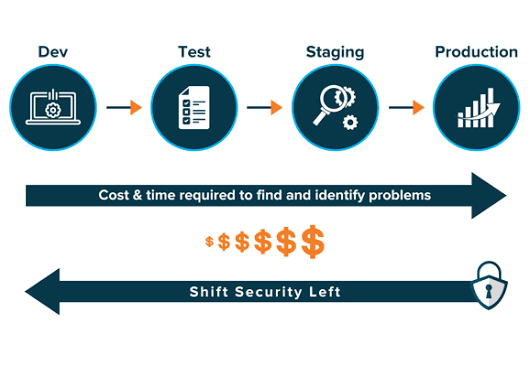
Security testing is most effective when it is integrated into the existing development workflow rather than performed only before a major release.
Automated checks can identify weaknesses early, allowing developers to address them before they become more expensive to fix.
A comprehensive CI/CD security strategy may include several testing methods:
- Static Application Security Testing (SAST): Examines source code for potentially insecure coding patterns.
- Software Composition Analysis (SCA): Identifies vulnerable third-party libraries and packages.
- Secret scanning: Detects credentials accidentally committed to source code.
- Infrastructure as Code scanning: Finds insecure infrastructure definitions and configuration mistakes.
- Dynamic Application Security Testing (DAST): Tests running applications for potential vulnerabilities.
- Container image scanning: Identifies known vulnerabilities and other risks in container images.
- Configuration and policy validation: Checks whether deployment settings meet established security requirements.
Not every check needs to run at the same stage or with the same level of strictness. Fast checks can run during pull requests, while more extensive testing can run in staging environments or before major releases.
Organizations should define risk-based policies for handling findings. Confirmed critical vulnerabilities may justify blocking a build or release, while lower-risk issues can be tracked for remediation according to established deadlines.
Security checks should provide actionable results so developers can understand the problem and resolve it efficiently.
The goal is to make security testing a normal part of software delivery without creating unnecessary delays or overwhelming teams with low-value alerts.
8. Secure Containers and Kubernetes Deployments
Containers and Kubernetes are widely used in modern software delivery, making their security an important part of CI/CD protection.
Container images may contain vulnerable operating system packages, outdated libraries, unnecessary utilities, or insecure default configurations. If these weaknesses reach production, they may increase the risk of compromise.
Organizations should use trusted base images, scan images before release, and rebuild them when important security updates become available. Images should be stored in controlled registries, and access to publish or modify release artifacts should be restricted.
Containers should run with the minimum privileges necessary. Where appropriate, teams should prevent privileged execution, use read-only filesystems, restrict Linux capabilities, and apply suitable runtime security policies.
Kubernetes environments also require careful configuration. Role-Based Access Control should restrict access to cluster resources, network policies should limit unnecessary communication, and secrets should be protected against unauthorized access.
Admission controls can enforce deployment requirements, such as allowing only approved images or preventing workloads from using prohibited configurations.
Teams should also monitor running workloads for unexpected behavior rather than assuming that successful image scanning guarantees runtime security.
By combining image scanning, secure configuration, access controls, and runtime monitoring, organizations can strengthen container security across the delivery lifecycle.
9. Verify Software Artifacts and Build Provenance
A secure CI/CD pipeline should provide confidence that the software being deployed is the software that was built, tested, and approved.
Attackers may attempt to replace artifacts, alter build outputs, or introduce unauthorized changes between testing and deployment. Without appropriate integrity controls, teams may have difficulty detecting these manipulations.
Cryptographic hashes can help verify that an artifact has not changed, while digital signatures can provide a way to verify its origin and integrity when supported by a trusted verification process.
Organizations should store release artifacts in controlled repositories and restrict who can publish, modify, or promote them.
Build provenance provides additional information about how an artifact was produced. Depending on the implementation, this information may include the source revision, build environment, workflow identity, and other details needed to assess whether the artifact came from an approved process.
Teams can use provenance verification to ensure that only artifacts produced by trusted workflows are eligible for deployment.
It is important to understand that signing an artifact does not automatically make it safe. A signed artifact may still contain vulnerable or malicious code if the build process itself has been compromised.
For this reason, artifact verification should be combined with trusted build infrastructure, source controls, security testing, and appropriate release approvals.
10. Apply Zero Trust Principles to CI/CD Environments
Zero Trust is a security approach based on the principle that access should not be automatically trusted simply because a user or system operates inside an organization’s network.
In CI/CD environments, this means verifying identities, limiting permissions, and evaluating access based on the specific resource and action involved.
For example, a deployment workflow should not receive broad production permissions simply because it runs on an internal build server. Its identity should be verified, and its access should be limited to the required deployment operation.
Organizations can apply Zero Trust principles through short-lived credentials, workload identity federation, network segmentation, and policy-based access controls.
Development, testing, staging, and production environments should have appropriate separation. A compromise in a lower-trust environment should not automatically provide access to production systems.
Sensitive operations, such as signing release artifacts or changing deployment policies, may require additional verification or independent approval.
These controls should be designed to minimize unnecessary friction while protecting high-risk actions.
Zero Trust is not a single product or configuration. It is an ongoing approach to reducing implicit trust and limiting the potential impact of compromised accounts, systems, and workflows.
11. Monitor Pipeline Activity and Detect Suspicious Behavior
Preventive security controls are essential, but they cannot eliminate every threat. Continuous monitoring helps organizations identify suspicious activity and respond when preventive measures fail.
CI/CD platforms, source repositories, build runners, artifact registries, and cloud environments should generate appropriate audit logs. These records can help teams investigate unexpected changes and understand how an incident occurred.
Security monitoring should focus on meaningful events, including unusual login activity, unexpected permission changes, modifications to pipeline configurations, unexplained build executions, and attempts to access sensitive credentials.
For example, if a release workflow suddenly begins publishing artifacts from an unexpected branch, monitoring and policy checks may help identify the problem before deployment.
Organizations can centralize relevant security events using logging and Security Information and Event Management (SIEM) systems. Alerting rules should be designed to prioritize high-risk activity and reduce unnecessary notifications.
Teams should also establish an incident response process that explains how to investigate suspicious behavior, revoke compromised credentials, isolate affected systems, and determine whether software artifacts need to be withdrawn or rebuilt.
Regular exercises can help validate whether the organization can respond effectively.
Monitoring is most valuable when alerts lead to clear actions. Teams should review detection quality, investigate recurring patterns, and use incident findings to strengthen preventive controls.
12. Automate Security Policies Without Creating Bottlenecks
Automation can help enforce security requirements consistently across multiple repositories and development teams. However, poorly designed policies can create unnecessary delays or encourage developers to bypass controls.
Organizations should define security requirements based on actual risk and make them consistent across projects where appropriate.
For example, a pipeline may block deployment when an artifact fails integrity verification, a secret is detected, or a confirmed critical vulnerability violates the organization’s release policy.
Lower-priority findings can be recorded and assigned remediation deadlines rather than blocking every build.
Security exceptions should follow a documented process. Teams should record why an exception is necessary, identify the responsible owner, define compensating controls where appropriate, and establish when the decision must be reviewed.
Policy enforcement should also provide useful feedback. Developers should know which requirement failed, what evidence triggered the decision, and how to resolve the problem.
Organizations can use policy-as-code to express security requirements in a consistent, testable format. These policies can cover infrastructure configurations, deployment permissions, container requirements, and other pipeline controls.
The objective is to make secure behavior predictable and repeatable without sacrificing the ability to deliver software efficiently.
13. Prepare for Emerging AI-Related Security Risks
Artificial intelligence is increasingly being used in software development through code assistants, automated testing tools, and AI-enabled development platforms. While these technologies can improve productivity, they also introduce security considerations that organizations should evaluate.
AI-generated code may contain insecure patterns, incorrect assumptions, or outdated recommendations. Developers should review generated code and subject it to the same testing and security standards as code written manually.
Organizations should also assess the permissions granted to AI development tools. Tools that can read repositories, access secrets, execute commands, or modify infrastructure may create additional risks if their access is broader than necessary.
Another concern is the handling of sensitive information. Developers should understand whether prompts, source code, or other submitted data may be processed by external services and follow organizational policies for confidential information.
AI-assisted workflows that execute commands or interact with external systems require additional safeguards, especially when processing untrusted inputs.
Security controls should remain independent of assumptions about AI-generated output. Code review, automated testing, dependency analysis, and access restrictions are still necessary.
As AI tools evolve, organizations should regularly review their security implications and update development policies accordingly.
The goal is not to avoid AI entirely, but to use it responsibly within a secure and well-governed development process.
14. Build a Security-First Culture Across Development Teams
Technical controls are only part of a strong CI/CD security strategy. People, communication, and organizational priorities also influence how effectively security is maintained.
Developers should receive practical guidance on secure coding, dependency management, secrets handling, and common pipeline vulnerabilities. Training should be relevant to the technologies teams actually use.
Security professionals should collaborate with developers and operations engineers early in the development process rather than appearing only when a release is ready.
Organizations should also encourage early reporting of security concerns. A culture that treats every vulnerability as an individual failure may discourage employees from speaking up, allowing problems to remain hidden.
A more constructive approach focuses on understanding why issues occurred and how processes can be improved.
Security champions can help teams adopt secure practices, answer routine questions, and connect developers with specialists when necessary.
Leadership support is equally important. Teams need sufficient time to address vulnerabilities, maintain dependencies, improve build infrastructure, and review security incidents.
When security becomes part of everyday engineering decisions, it is easier to maintain consistent protection as applications and development environments grow.
15. Measure and Continuously Improve CI/CD Security
Securing a pipeline is not a one-time project. New vulnerabilities, changing dependencies, evolving attack techniques, and architectural changes require ongoing evaluation.
Organizations should establish metrics that reveal whether their security controls are producing meaningful results.
Useful measurements include:
- Time to remediate vulnerabilities: How quickly identified security issues are resolved.
- Critical findings reaching production: How often serious issues bypass earlier controls.
- Secret exposure incidents: How frequently credentials are exposed and how effectively the organization responds.
- Pipeline security coverage: Which repositories, workflows, and deployment environments are protected by established controls.
- Build integrity verification: Whether released artifacts can be traced to approved build processes.
- Access review completion: Whether privileged permissions and service identities are reviewed regularly.
- Incident response performance: How effectively teams detect, contain, and investigate security events.
Metrics should be interpreted carefully. An increase in detected vulnerabilities may reflect improved scanning rather than weaker security.
Teams should also examine recurring issues, review exceptions, and gather feedback from developers to identify unnecessary friction.
Regular assessments can reveal gaps in repository protection, build isolation, artifact verification, or incident response. Organizations can then prioritize improvements according to risk and available resources.
Continuous improvement helps keep security controls aligned with the actual threats facing the software delivery environment.
Conclusion
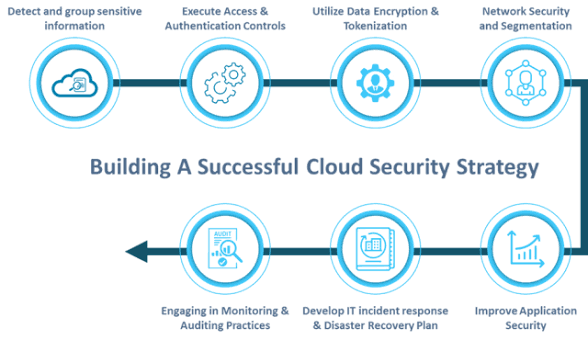
Securing CI/CD pipelines against emerging cybersecurity threats requires a comprehensive approach that protects source code, credentials, build infrastructure, dependencies, software artifacts, and production environments.
Strong identity controls and secrets management help prevent unauthorized access. Supply chain security and dependency scanning reduce exposure to compromised components. Hardened build environments, artifact verification, and secure deployment policies help preserve software integrity. Continuous monitoring and effective incident response provide additional protection when preventive measures fail.
However, technology alone cannot guarantee a secure pipeline. Organizations must also establish clear responsibilities, provide practical security training, prioritize risks intelligently, and encourage collaboration between development, security, and operations teams.
The most effective strategy is to integrate security into the entire software delivery lifecycle rather than relying on a final inspection before release.
By implementing appropriate controls gradually, measuring their effectiveness, and adapting to new threats, organizations can build more resilient CI/CD pipelines without sacrificing development speed.
Ultimately, secure software delivery is about ensuring that every change moving from source code to production can be trusted, verified, and managed responsibly. As cyber threats continue to evolve, making pipeline security an ongoing engineering priority will help organizations protect their applications, their customers, and their long-term business operations.